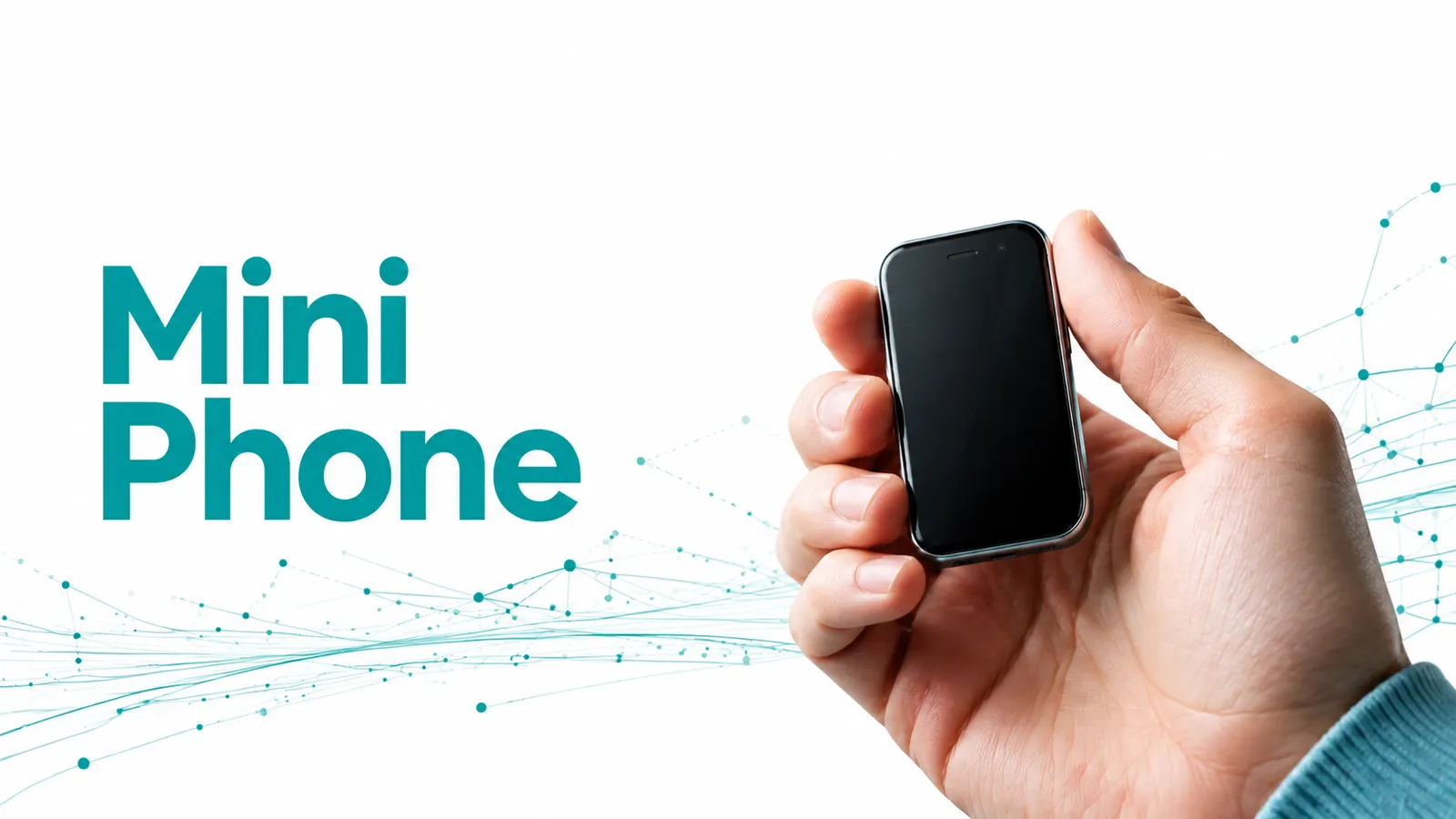
A mini phone is any phone built dramatically smaller than a normal smartphone, from keychain-sized feature phones to shrunk-down Android smartphones to discontinued small flagships like the iPhone 12 mini. This guide breaks down the real types, honest limitations, and genuine benefits, ranks the 10 most popular mini phones you can actually buy in 2026, and explains why most "under $10" listings on Amazon are not what they claim to be.
You've probably seen the ad: a phone smaller than a credit card, "world's smallest smartphone," selling for a suspiciously low price. Some of that is real. Most of it isn't. A mini phone can mean a genuinely useful backup device or a barely functional toy, and the label alone won't tell you which one you're looking at.
The mini phone market has actually grown up a lot. Companies like Unihertz now build real Android phones that fit in a matchbox, while Apple quietly walked away from the small flagship market after killing the iPhone mini line. That's left a strange gap: shoppers who want something tiny and functional now have to sort through novelty gadgets, genuine niche smartphones, and secondhand flagships to find what actually fits their pocket and their needs. This guide sorts all of it out.
What Is a Mini Phone?
A mini phone is any phone built to be dramatically smaller than a normal smartphone, whether that means a tiny feature phone made for calls and texts, or a shrunk-down but still functional Android smartphone. The term covers two very different products, and knowing which one you actually want matters more than the label itself.
Some searchers use "mini phone" to mean a keychain-sized novelty device built for minimalism or emergency backup. Others use it to mean a compact but fully capable smartphone, closer in spirit to the discontinued iPhone 12 mini than to a toy. Both are real, and both show up when you search the term, so the rest of this guide covers each category on its own terms.
You'll also see the term used loosely for anything marketed as a "pocket mini phone" or a "cute mini phone," which usually just means a colorful, small-form novelty device aimed at casual buyers rather than a distinct technical category. The core split still holds: either it's a stripped-down feature phone, or it's a genuinely smaller version of a smartphone you already recognize.
What Types and Features Do Mini Phones Have?
Mini phones fall into four real categories: keychain feature phones, mini Android smartphones, companion phones, and compact flagships. Each one trades size for a different set of features, so the "best" mini phone depends entirely on what you actually need it to do.
Keychain feature phones run a basic operating system built only for calls, texts, and sometimes a camera. They're the smallest option by far and often last over a week on standby, but they can't run apps.
Mini Android smartphones, like the ones MakeUseOf covers in its smallest-phones roundup, run real versions of Android with app stores, cameras, WiFi, and Bluetooth, just squeezed into a 2.5 to 3 inch screen.
Companion phones are built to pair with your main phone number, letting you leave your primary device at home for a workout or errand.
Compact flagships are simply smaller versions of normal high-end phones, like the iPhone mini line, with none of the trade-offs of a true mini device beyond a smaller screen and battery.
Features scale with the category. Keychain phones usually offer just calls, texts, and a flashlight. Mini Android smartphones add a touchscreen, a basic camera, dual SIM slots, WiFi, and Bluetooth, though rarely 5G. Companion and compact flagship models keep nearly everything a full-size phone has, including modern cameras and fast charging, just in a smaller shell.
Do Mini Phones Really Work? The Real Limitations
Yes, mini phones really work, but they come with real trade-offs you should know about before buying one. The smaller the phone, the smaller its battery, storage, and screen, and all three of those limits shape daily use more than the marketing photos suggest.
TinyPhones.uk, a specialty retailer, points out that smaller batteries mean shorter runtime on smartphone-style mini devices, even though keychain feature phones actually last longer on standby thanks to their simple displays and minimal processing needs. Storage on budget mini Android phones commonly caps out around 16 to 32GB, which fills up fast if you plan to install more than a few apps.
Screen size is the other honest limitation. A 2.5 to 3 inch display makes browsing, typing, and watching video noticeably harder than on a normal phone. If your plan is to use a mini phone as your only device for daily browsing and streaming, you'll likely find it frustrating within a week.
There's also a heat and charging trade-off that rarely shows up in the marketing. A tiny body has less room to dissipate heat, so a mini smartphone under sustained load (video, gaming, GPS navigation) tends to warm up and slow down faster than a full-size phone with the same chipset. None of this makes mini phones unusable. It just means you should buy one for what it's actually good at, not as a full replacement for your everyday driver.
The Real Benefits of Going Mini
The appeal of a mini phone isn't really about specs. It's about what a tiny device lets you skip: the bulk, the distraction, and sometimes the cost of a full-size smartphone.
Portability is the obvious win. A mini Android smartphone or a keychain feature phone slides into any pocket without the bulge of a modern 6.5 inch flagship, which matters for runners, hikers, and anyone who just wants a lighter everyday carry. Digital minimalism is a growing reason too, with people using a mini phone as their primary device specifically to cut down on scrolling and notifications.
Backup and travel use is another common case. A cheap mini phone with its own SIM makes a solid emergency backup if your main phone dies or gets stolen abroad. And for kids or elderly parents who only need calls and texts, a simple mini phone avoids the cost and complexity of a full smartphone entirely, along with the temptation of an always-on app store.
Cost is a quieter benefit too. A functional mini Android phone in the $20 to $50 range costs a fraction of even a budget mainstream smartphone, which matters if you just need a second working number without a second full monthly plan.
Compact flagships offer a different kind of benefit: real performance in a genuinely smaller shape. PhoneArena notes that the Galaxy S25 remains the smallest and lightest current Android flagship, proof that "small" and "capable" aren't mutually exclusive if you're willing to pay flagship prices.
The 10 Most Popular Mini Phones Right Now (Reviewed)
Here's a rundown of the mini phones people actually search for, buy, and use in 2026, spanning true novelty devices, mini Android smartphones, and the last of the small iPhones.
-
Unihertz Jelly Star. Unihertz's own specs page confirms this 3-inch Android 13 smartphone is currently the smallest fully capable Android phone in production, with real apps, a camera, and 4G LTE. It's the safest pick if you want something genuinely tiny that still works like a smartphone.
-
Unihertz Jelly 2. The predecessor to the Jelly Star, slightly lighter and usually cheaper secondhand, with the same 3-inch form factor and a similar app-friendly Android build. A solid pick if you want the Jelly Star experience without paying current-generation prices.
-
Unihertz Jelly Max. A different kind of mini phone: a 5-inch screen paired with genuinely high-end internals, for buyers who want smaller-than-average size without giving up modern performance for gaming or photography.
-
Soyes XS15. A budget mini Android phone with a 3-inch display, listed at $45.99 on Walmart, proving genuine mini smartphones do exist well below flagship prices, even if the specs are modest.
-
Zanco Tiny T1. Widely marketed as the world's smallest phone by physical footprint, built purely for calls, texts, and long standby time. It's a keychain accessory first and a phone second, and it's the phone most people actually mean when they search for a "pocket mini phone."
-
Zanco Tiny T2. The step up from the Tiny T1, adding a basic camera and a slightly larger screen while staying in the same ultra-compact feature phone category. A reasonable middle ground if you want a tiny phone that can still snap a quick photo.
-
Pockify. A direct-to-consumer novelty mini phone sold through its own storefront with a return policy, popular on social media for its pocket-sized design and simple call and text functionality. It leans harder into the "cute mini phone" aesthetic than the Zanco or Unihertz lines, which is a big part of its appeal.
-
Palm Phone (PVG100). GSMArena's spec sheet shows this 2018-era companion smartphone still shows up as a used and renewed option on Amazon today, built to pair with a second line on your existing carrier rather than replace your main phone. It's one of the few mini phones with actual major-carrier compatibility built in from day one.
-
iPhone 12 mini. Apple's smallest modern flagship, discontinued but still capable thanks to its A14 chip, commonly found refurbished for buyers who want a genuinely small iPhone at a lower price than the 13 mini.
-
iPhone 13 mini. The last mini iPhone Apple ever made, with meaningfully better battery life than the 12 mini, making it the better used pick between the two if you can find one at a fair price.
That list covers the realistic range: sub-$50 novelty and mini Android devices at one end, and secondhand small flagships at the other. There isn't much middle ground, which is exactly why price expectations trip so many first-time buyers up.
Mini Phone Cheapest Price: What Do You Actually Get for Under $10?
You won't find a real, working mini phone for under $10. Genuine mini Android smartphones start around $20 to $45, and anything priced far below that is almost always a non-functional toy, a phone-shaped Bluetooth speaker, or a listing that won't actually ship a working device.
The Soyes XS15 is a useful benchmark here: a genuinely functional 3-inch Android phone still runs $45.99 through a major retailer like Walmart. Wholesale bulk pricing can dip closer to $20, but that's a per-unit business rate, not a realistic single-purchase price on Amazon. If you see a "mini phone" listed for $5 or $8, assume it's either a toy, a case, or a scam listing until proven otherwise.
That doesn't mean every cheap option is fake. Products like Pockify sell in a reasonable $20 to $40 range and back the purchase with an actual return window, which is the kind of signal worth looking for before you buy from an unfamiliar seller. If a small flagship like the iPhone mini line fits your budget better than a novelty device, it's worth taking a minute to compare phone listings before assuming a tiny Android phone is your only compact option.
Is the iPhone 12 Mini Still Worth Buying in 2026?
Yes, with one big caveat: check the battery health before you buy. CertiMag's 2026 review confirms the A14 chip still runs iOS smoothly years later, so performance isn't the problem. Battery capacity, worn down after years of daily charging cycles, usually is.
If you're choosing between the two small iPhones, the iPhone 13 mini is generally the smarter pick, since it shipped with a larger battery and holds up noticeably better for a full day of use. Whichever one you consider, the iPhone to stay away from is any mini model with an already-degraded battery and no replacement history. Since Apple stopped making a small flagship after the 13 mini, buying either model means accepting an aging battery as the trade-off for the smallest iPhone shape available.
Before buying either used, check what to look for in a used phone, especially battery health and IMEI status, and compare current iPhone prices to see whether a newer compact option makes more sense for your budget.
Final Thoughts
"Mini phone" covers real, useful devices and gimmicky toys under the same search term, so the type you actually want matters more than the label. Keychain feature phones and mini Android smartphones both genuinely work, just with real trade-offs in battery, storage, and screen size that are worth knowing before you buy.
If you want a small phone that still performs like a modern smartphone, browse compact phones built with real flagship internals rather than a novelty shell. And whether you're downsizing to a mini phone or trading in your current device to fund the switch, swapping it safely with another buyer beats letting it sit in a drawer. Checking the actual specs beats trusting an ad that promises the world's smallest phone for less than a coffee, and now you know exactly what to check.
Frequently Asked Questions
Does a mini phone actually exist and work? Yes. Genuine mini phones exist in two forms: keychain feature phones built for calls and texts, and mini Android smartphones with real apps and cameras. Both work as advertised, but ultra-cheap listings under $10 are usually toys or non-functional, not real phones.
What is the best tiny phone right now? The Unihertz Jelly Star is generally considered the best fully functional mini smartphone in 2026, with a 3-inch screen, Android 13, and real app support. For a call-and-text-only device, the Zanco Tiny T1 remains the smallest true keychain phone available.
What is the smallest mini phone available? The Zanco Tiny T1 is widely marketed as the smallest phone by physical footprint, built for calls, texts, and long standby time rather than apps. If you need app access, the Unihertz Jelly Star is the smallest fully capable Android smartphone currently in production.
Is it worth buying an iPhone 12 mini in 2026? Yes, as long as you check the battery health first. The A14 chip still runs iOS smoothly, but battery capacity is the main weak point on older used units. The iPhone 13 mini is generally the better pick if you can find one, thanks to its larger battery.
What is the best replacement for the iPhone 12 mini? The iPhone 13 mini is the closest direct replacement, since Apple never released another small flagship after it. If you're open to a larger screen, the Galaxy S25 is currently the smallest and lightest mainstream Android flagship on the market.