
A Comprehensive Guide to Secure Phone Trade-Ins in Pakistan
Introduction: What is Mobile Swapping?
Mobile swapping (also known as phone exchange or phone barter) is the direct trading of smartphones between two individuals. Instead of going through the tedious two-step cycle of selling your current phone for cash, waiting for buyers, and then spending additional funds to purchase another model, swapping allows you to exchange equivalent device value instantly.
In modern online trading, swaps fall into two primary categories:
-
Equal/Straight Swap (1 on 1 Trade): Two handsets of matching market valuation, specifications, and physical condition are exchanged without any cash balance (e.g., swapping an iPhone 13 128GB for a Samsung Galaxy S22 128GB in equivalent condition).
-
Differential Swap (Trade-In + Cash Top-Up): When the two devices differ in value, the user upgrading pays a cash balance (referred to as a top-up or differential amount) to bridge the gap (e.g., trading a Redmi Note 12 plus PKR 25,000 for a Google Pixel 7).
Online mobile swapping maximizes liquidity for phone buyers and sellers, helping users upgrade their hardware without tying up extra capital or paying steep retail markups to second-hand dealers.
How to Swap Mobile Phones Safely in Pakistan
Navigating the pre-owned mobile market in Pakistan requires deliberate precautions regarding legal compliance, hardware integrity, and software status:
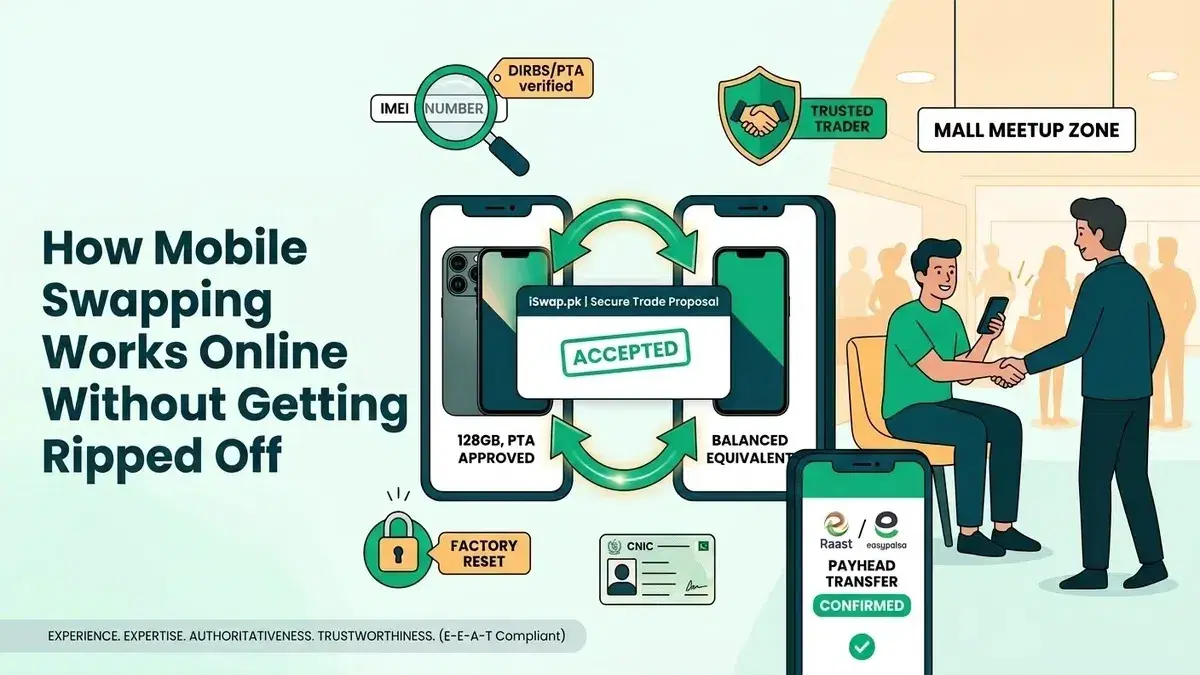
Official PTA DIRBS Verification: Never accept an unverified device. Verify the device IMEI via the official PTA DIRBS service (dial *#06# to get the IMEI, then send an SMS to 8484 or check on dirbs.pta.gov.pk) to ensure the handset is tax-paid and legally registered.
Matching Original Accessories & Packaging: Always insist on matching serial numbers/IMEIs on the original box. Handsets sold without packaging carry a higher risk of being stolen or subject to recovery claims.
Hardware Diagnostics Check: Run native hardware test suites (e.g., dial #0# on Samsung devices, or use built-in diagnostics) to check the touchscreen digitizer, display burn-in, biometric sensors (FaceID/TouchID), cameras, and battery health metrics.
CPID, Patch & Software Auditing: Inspect the phone's software status in settings. Devices modified with CPID servers or patched IMEIs may lose network connectivity or brick upon performing a factory reset. Always factory reset the phone before completing the trade.
** Take the Mobile phone to an Authorized Dealer: It will create trust in buying, and technically will get you an inspection report before buying the device.
How We Are Doing Mobile Swaps on iSwap.pk: Step-by-Step Guide
At iSwap.pk, we eliminate the chaos of unorganized classifieds by structuring trade proposals around precise database specs and clear status tracking.
Step 1: Listing & Spec-Matching Database Entry
When creating a listing on iSwap.pk, you specify your exact smartphone model, variant, storage capacity, PTA status (Approved / Non-PTA), physical condition rating, and included accessories. The platform indexes these parameters into structured database records rather than relying on ambiguous text descriptions.
Step 2: Defining Swap Preferences
Unlike general classified sites, iSwap.pk lets you explicitly define your swap criteria. Sellers can select acceptable target brands (e.g., Apple, Samsung, Google Pixel), preferred models, or set maximum cash top-up limits.
Step 3: Formal Trade Offer & Proposal Negotiation
When a user wants to swap, they initiate a formal trade proposal directly on the platform. The offer locks in:
- The user’s offering device.
- The target listing device.
- The agreed cash top-up amount (if applicable).
Step 4: Database Negotiation State Management
iSwap.pk uses structured transaction states to prevent miscommunication:
PENDING: Proposal submitted; both parties review device specs, condition photos, and proposed top-up cash.
ACCEPTED: Both parties agree on swap terms. Secure communication channels open to schedule the physical inspection and meetup.
CANCELLED: Proposal declined or withdrawn. The listing automatically returns to active public discovery.
Understanding Risk Factors in Mobile Swapping
To avoid getting scammed, keep an eye out for these common industry risk factors:
Stolen or Blacklisted IMEIs: Stolen devices reported to law enforcement or PTA will eventually lose SIM network connectivity or face remote iCloud / Google FRP locks.
CPID / Software-Patched IMEI Reversion: Unofficial software patches can revert to non-approved original IMEIs after a factory reset or system update.
Refurbished / Aftermarket Parts Substitution: Undisclosed low-quality replacement screens, non-genuine batteries, or bypassed TrueTone/FaceID modules.
Counterfeit Cash & Fake Transfer Screenshots: Fraudulent bank transfer receipts or fake SMS alerts provided during street-level meetups.
Physical Safety Hazards: Snatching, armed robberies, or pressure tactics occurring in isolated meeting spots.
Recommended for you
 Best Time to Sell Your Phone in Pakistan Before a New Launch
 Xiaomi 18 Pakistan Launch Date: What’s Confirmed?
 Apple iPhone Duo Review: What's New is Introduced ?
 Samsung Galaxy S26 Review: Is It Worth Buying?
 Samsung Galaxy Z Fold 8 Ultra Review: Is It Worth Buying?
 Mobile Virtual Network Operator Explained: How MVNOs Work in 2026 ?
How to Avoid These Risk Factors (5-Point Protocol)
Mandatory In-Person Factory Reset: Never accept a phone without wiping it on the spot. A full factory reset proves that Apple ID / Google FRP locks are completely clear and tests if the PTA approval status remains intact.
On-Site PTA DIRBS Verification: Dial *#06# to display the hardware IMEI on screen. Cross-check it with the box IMEI and verify it on the PTA DIRBS app over your mobile data.
Hardware & Component Audit: For iPhones, connect to a laptop running diagnostic software (such as 3uTools) to verify original battery serials, screen replacements, and camera module status.
CNIC / Identity Exchange: Exchange physical photocopies or digital photos of CNICs (National Identity Cards) along with a signed trade receipt detailing both device IMEIs and any cash transferred.
Formal Documentation of the Transaction: Always make sure to take signatures and thumb impressions on paper with all credentials and the details of the mobile device from the other party for the safety of the transaction.
How to Pay Safely for Swaps (Cash Top-Ups)
When a swap involves a cash differential, enforce strict payment guidelines:
Live Electronic Funds Transfer (IBFT): Use trusted banking applications (Raast, HBL, Meezan Bank, EasyPaisa, JazzCash) to complete transfers on the spot.
Verify via Your Own App: Never rely on SMS notifications or payment screenshots shown by the seller. Always open your own mobile banking app to confirm ledger credit before handing over your device.
Safe Physical Cash Handling: If paying in cash, complete the trade inside a bank branch or ATM vestibule equipped with security cameras and bill-counting machines.
Safe Meetup Protocols in Pakistan (Preventing Snatching & Theft)
To ensure your physical safety in busy urban centers like Karachi, Lahore, Rawalpindi, or Islamabad, follow these location guidelines:
Recommended Safe Meetup Locations
Major Shopping Malls: Food courts or indoor seating areas with security checkpoints (e.g., Packages Mall, Emporium, Dolmen Mall, Centaurus).
Bank Lobbies & ATM Vestibules: Armed security guard presence, active CCTV surveillance, and secure cash deposit access.
Well-Lit Cafes & Public Places: Popular spots with steady foot traffic and visible security cameras.
Strictly Avoid:
Isolated Parking Lots: Vehicles parked in dark, quiet, or deserted streets.
Private Residences: Entering an unknown trader’s home or private apartment block.
Late-Night Meetups: Meeting after dark or in desolate public parks.
Carrying Stacks of Cash or ATM Card along with you. if asked cash by the swapper, do it inside the back. Withdraw the cash and pay the customer within the vicinity of the BANK.
💡 Golden Rule of Swapping: Always bring a friend or family member along. Keep your phone hidden in a bag until you are safely seated inside a monitored venue. If a buyer or seller requests a last-minute change to an unfamiliar location, cancel the meeting immediately.






Comments
View commentsHideLoading comments…