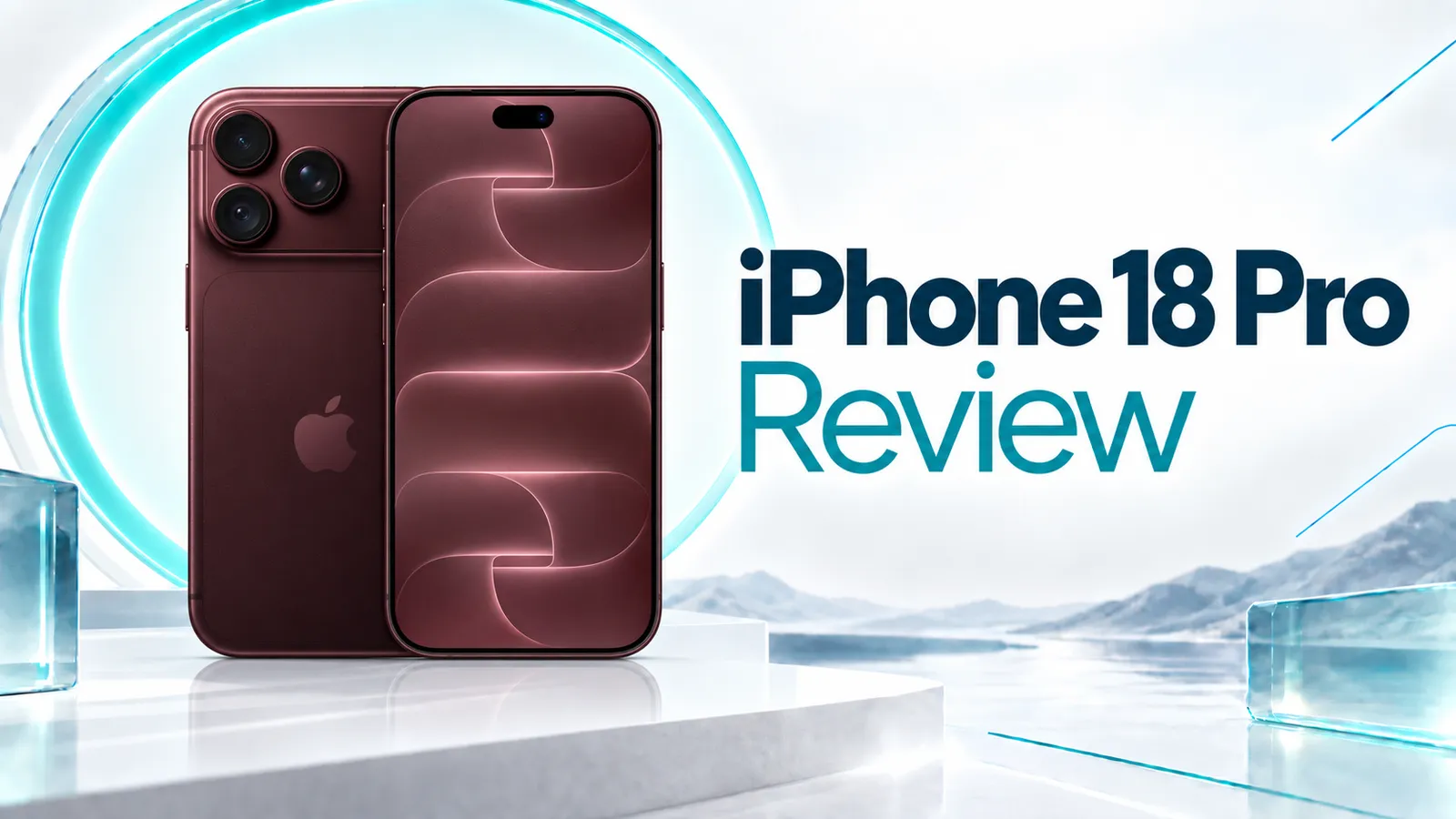
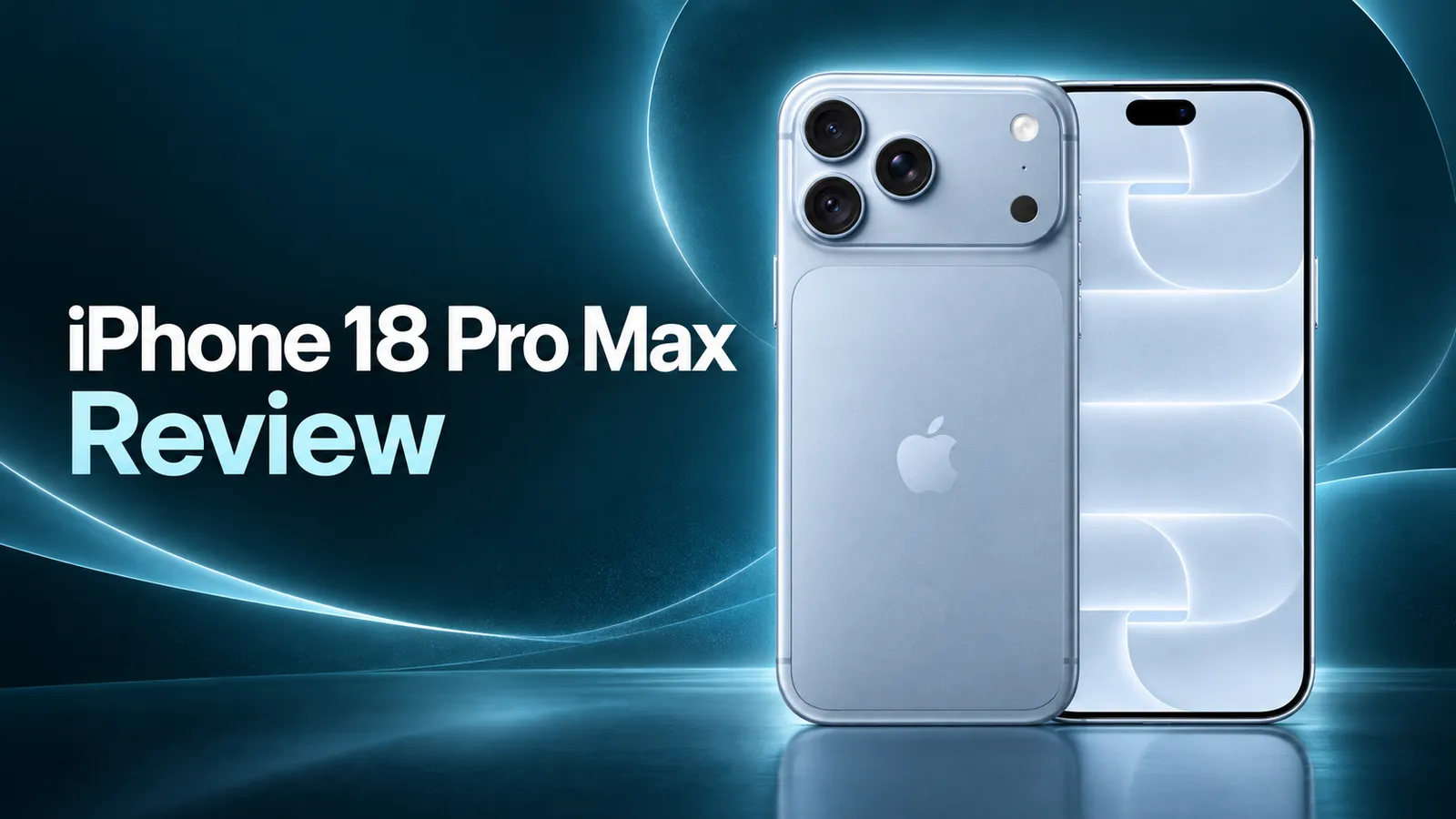
Apple announced the iPhone 18 Pro Max on September 9, 2026, alongside the smaller iPhone 18 Pro and the foldable iPhone Duo. It's built around a 6.9-inch display, the new A20 Pro chip on a 2nm process, and a 48MP main camera with the first variable aperture Apple has ever shipped on an iPhone. Battery life reaches up to 45 hours of video playback, the longest of any iPhone Apple has made. It starts at $1,299 in the US, a $100 increase over last year, and ships September 18, 2026. Here's the full picture, including whether it's worth upgrading and how it stacks up against Samsung and Google's biggest phones.
Apple's Biggest, Longest-Lasting iPhone Yet
Every year, the Pro Max is the iPhone Apple builds for people who don't want to compromise, and the iPhone 18 Pro Max keeps that promise in the two areas that matter most for a phone this size: screen and battery. At 6.9 inches, it has the largest display Apple puts in a non-folding phone, and Apple says it now lasts up to 45 hours on a single charge playing video, a real jump that puts real distance between it and everything else in Apple's lineup, including its own foldable.
This launch also carries a bit of extra weight beyond the usual yearly refresh. The iPhone 18 Pro Max was unveiled at Apple's "Surprise and Shine" event, the same keynote that introduced the iPhone Duo, Apple's first folding phone. If you're weighing a folding screen against a familiar slab design, we cover that phone in full in our iPhone Duo review.
This guide goes deep on what's actually new here: the full spec sheet, what the new variable aperture camera changes about how the phone shoots photos, how the rest of the camera system holds up, real numbers on the display and battery, whether upgrading from an iPhone 17 Pro Max makes sense, how the Pro Max compares to the smaller iPhone 18 Pro, how it stacks up against Samsung's and Google's biggest phones, and what to expect on price in Pakistan.
Apple iPhone 18 Pro Max Full Specifications
Here's the full spec sheet, based on Apple's official specifications and Apple's buy page, corroborated by GSMArena's post-launch spec listing:
- Display: 6.9" LTPO Super Retina XDR OLED, 1320 x 2868 pixels (~460 ppi), adaptive refresh up to 120Hz (ProMotion), 1000 nits typical max, 1600 nits HDR, 3000 nits peak outdoor brightness
- Chipset: Apple A20 Pro (2nm), 6-core CPU, 7-core GPU with Neural Accelerators, dual 16-core Neural Engine
- RAM / Storage: 12GB RAM (not officially published by Apple, but consistently reported across independent sources), with 256GB, 512GB, 1TB, or 2TB storage, the largest tier now available on both Pro models
- Rear cameras: 48MP main with variable aperture from f/1.48 to f/4.0, a first for any iPhone, plus a 48MP ultrawide and a 48MP telephoto with a true 4x optical zoom, extended to 8x "optical-quality" zoom via sensor cropping, and a combined 16x optical-quality zoom range across the system
- Front camera: 18MP Center Stage
- Battery: Up to 45 hours of video playback, Apple's longest yet in an iPhone; 5567mAh in the eSIM-only version, 5391mAh in markets that still use a physical SIM tray
- Charging: Wired charging to 50% in about 15 minutes, plus MagSafe wireless charging
- Build: Aluminum unibody frame, Ceramic Shield 2 front glass, Ceramic Shield back glass, IP68 rated for water resistance up to 6 meters for 30 minutes
- Dimensions: 163.4 x 78.0 x 8.75mm
- Weight: 249g
- OS: iOS 27, with Apple Intelligence and the newer Siri AI features
- Colors: Silver, Black, Glacier, and Burgundy
A couple of things are worth flagging before we go further. Apple doesn't officially publish RAM or exact battery capacity on its spec pages, so the 12GB and mAh figures above come from independent reporting and regulatory filings rather than Apple's own copy, though they're consistent across multiple sources. And despite Apple's aluminum choice this generation, this isn't a downgrade from a metal that matters less, titanium and aluminum trade off differently on weight, heat dissipation, and cost rather than one simply being "better."
Design and Build Quality
The iPhone 18 Pro Max sticks with an aluminum unibody frame rather than titanium, a choice Apple carried over from last year after switching away from titanium for the 17 generation. Aluminum dissipates heat more efficiently, which matters more as chips get faster, and that's likely why Apple has stuck with it two years running despite titanium's premium reputation.
Both the front and back are glass. The front uses Ceramic Shield 2, Apple's tougher, more scratch-resistant formulation, while the back uses the standard Ceramic Shield. The whole package is IP68 rated, meaning it can survive being submerged up to 6 meters deep for 30 minutes, a genuinely strong water-resistance claim for a phone this size. At 249 grams and 8.75mm thick, it's a substantial phone to hold, though that's the trade-off that comes with a 6.9-inch display and Apple's biggest battery.
Color options this year are Silver, Black, Glacier, and Burgundy. Glacier is the standout new addition, a cooler, icier finish that's noticeably different from anything Apple has offered in recent Pro Max generations, while Burgundy carries over as the deep red option for buyers who want something less neutral than Silver or Black.
The Variable Aperture Camera, Explained
The headline camera feature this year isn't a new sensor, it's a variable aperture, and it's worth understanding what that actually changes. Every iPhone camera before this one has used a fixed aperture, meaning the size of the opening that lets light into the lens never changes. The iPhone 18 Pro Max's 48MP main camera can now physically adjust that opening between f/1.48 and f/4.0.
In plain terms, a wider aperture like f/1.48 lets in more light for dim rooms or nighttime shots, but also creates a shallower depth of field, the effect where your subject stays sharp while the background blurs. A narrower aperture like f/4.0 lets in less light but keeps more of the scene in focus front to back, useful for landscapes or group photos. Until now, iPhones have simulated that blurred background computationally through Portrait mode. A real variable aperture does it optically, the way a dedicated camera lens does, which generally produces more natural results around tricky edges like hair or glasses.
This matters most for people who care about the difference between a good photo and a great one: portrait photographers, product and food shooters, or anyone frustrated by Portrait mode's occasional mistakes. If you just point and shoot, the phone still handles that automatically, so this adds real capability without adding complexity for people who don't want it.
How Good Is the Rest of the Camera System?
Outside the new variable aperture, the rest of the camera system is a known quantity with one real limitation. The 48MP ultrawide handles wide scenes and macro shots well, and the 48MP telephoto's true optical zoom is 4x, unchanged from the iPhone 17 Pro Max. Apple's 8x "optical-quality" figure comes from cropping into the 48MP telephoto sensor rather than a longer physical lens, and the 16x figure describes the combined range across the whole system, not one continuous optical zoom.
That's worth knowing plainly: if you were hoping for a longer true optical zoom this year, similar to what Samsung's Ultra-tier phones offer with periscope lenses reaching 5x or beyond, this generation doesn't deliver that. What you do get is a genuinely strong 18MP Center Stage front camera, and video capture that goes all the way up to 4K at 120fps with Dolby Vision HDR, ProRes, and ProRes RAW support, tools aimed squarely at people who edit footage seriously rather than just posting straight from the camera roll.
Display Quality and Everyday Use
The 6.9-inch display is built around the same core technology Apple has used for a few generations now, LTPO Super Retina XDR OLED with adaptive ProMotion refresh up to 120Hz, but the brightness ceiling keeps climbing. Peak outdoor brightness now reaches 3000 nits, which makes a real difference reading the screen in direct sunlight, a scenario where older, dimmer OLED panels used to wash out noticeably.
At 460 pixels per inch, text and fine detail stay sharp even up close, and the size itself is the real selling point for anyone who reads, watches video, or games on their phone regularly. A larger canvas means less scrolling, bigger touch targets, and a genuinely better experience for split-screen multitasking in apps that support it, even without the side-by-side layout Apple built specifically for the iPhone Duo's fold.
Performance and the A20 Pro Chip
The A20 Pro is built on a 2nm manufacturing process, a first for any smartphone chip, pairing a 6-core CPU with a 7-core GPU that includes dedicated Neural Accelerators alongside a dual 16-core Neural Engine. That combination is aimed squarely at on-device AI processing, the kind of work Apple Intelligence and the newer Siri AI features lean on, rather than just raw gaming or benchmark numbers.
RAM hasn't been officially confirmed by Apple, but independent reporting consistently points to 12GB, unchanged from the iPhone 17 Pro Max. That reads less like a shortfall and more like a sign Apple sees this generation's real upgrade in efficiency and AI capability rather than raw memory headroom. For heavy multitasking, editing 4K ProRes footage on the go, or gaming at high settings, the extra GPU cores should translate into smoother sustained performance rather than just faster benchmark scores that fade under real load.
Battery Life and Charging
This is where the iPhone 18 Pro Max genuinely separates itself, not just from its own lineup but from every iPhone Apple has made. Apple rates it for up to 45 hours of video playback, and while battery claims are always measured under ideal conditions, the underlying hardware change is real: a larger cell, reported at 5567mAh in the eSIM-only US version and 5391mAh where a physical SIM tray remains, a genuine capacity increase rather than just a software efficiency claim.
Charging hasn't changed as dramatically. Wired charging still reaches 50% in about 15 minutes, and MagSafe wireless is supported, but Apple hasn't pushed wired speeds further this generation the way some rivals have. For most people, a bigger battery that needs charging less often will matter more day to day than shaving a few minutes off a charging session.
iOS 27 and Software Features
The iPhone 18 Pro Max ships with iOS 27, which brings Apple Intelligence deeper into system-level features and the newer Siri AI capabilities Apple has been building out. Established Pro-tier tools carry over too: Dynamic Island for live activities and notifications, the Action Button for quick shortcuts, and Camera Control, the dedicated button Apple introduced for adjusting camera settings and triggering shutter without touching the screen.
None of this is exclusive to the Pro Max specifically, since the smaller iPhone 18 Pro runs the identical software, but the larger display does make certain iOS 27 features, particularly anything involving side-by-side content or detailed photo and video editing, noticeably more comfortable to use for extended periods.
Should You Upgrade From the iPhone 17 Pro Max?
If you already own an iPhone 17 Pro Max, the case for upgrading comes down almost entirely to the camera and the battery. The variable aperture is a genuine first, not an incremental bump, and the battery increase is real rather than just a software efficiency claim. Display brightness and chip generation are improved too, but more modestly, the kind of gains that show up on a spec sheet but are harder to notice day to day.
If you're coming from an iPhone 15 Pro Max or older, the jump is much easier to justify, since you'd pick up two or three generations of chip improvements, the variable aperture, and meaningfully better battery life all at once. For 17 Pro Max owners specifically, this is worth upgrading to if photography is a real priority or your battery life has started to disappoint, and reasonable to skip otherwise.
iPhone 18 Pro Max or the iPhone 18 Pro: Which Should You Buy?
The core experience is identical between the two phones. Same chip, same camera hardware, same software, same build materials. The decision genuinely comes down to size and battery life rather than capability.
Choose the Pro Max if you want the biggest possible screen, the longest battery life Apple has ever offered, and don't mind a heavier, larger phone in your hand or pocket. We cover the smaller model in full in our iPhone 18 Pro review, including why plenty of buyers are choosing to go smaller this year rather than defaulting to the biggest option. If one-handed use and pocketability matter more to you than screen real estate, that's the phone to read next.
How Does It Compare to the Galaxy S26 Ultra and Pixel 10 Pro XL?
Against Samsung's Galaxy S26 Ultra, the iPhone 18 Pro Max trades camera versatility for polish elsewhere. Samsung's 200MP main sensor and 5x periscope telephoto give it a real edge in zoom range that Apple's 4x true optical zoom doesn't match, even with the new variable aperture adding flexibility Samsung doesn't offer. Samsung also backs the S26 Ultra with 7 years of guaranteed software updates, longer than Apple's typical window.
Against the Google Pixel 10 Pro XL, it's more a philosophy difference than a spec gap. Google leans on computational photography some reviewers rate ahead of Apple's approach in complex lighting, while Apple's variable aperture and ProRes tools suit more deliberate, manual shooting. Both rivals also offer 7 years of software support.
If raw zoom range and update longevity matter most, both Android rivals have a real case. If you want the most capable video tools and prefer iOS, the Pro Max holds its ground without matching Samsung's telephoto reach.
What Are the Pros and Cons of the iPhone 18 Pro Max?
Pros:
- First-ever variable aperture (f/1.48 to f/4.0) on an iPhone main camera
- Longest battery life Apple has ever put in an iPhone, up to 45 hours of video playback
- Bright 3000-nit outdoor display with adaptive ProMotion
- Strong A20 Pro performance built on a 2nm process
- IP68 water and dust resistance
- 2TB storage now available
- Genuinely capable video tools, including ProRes RAW and Dolby Vision HDR
Cons:
- True optical zoom is still capped at 4x, unchanged from last year, despite the "8x optical-quality" marketing figure
- $100 price increase over the iPhone 17 Pro Max
- No RAM increase, still reportedly 12GB
- Large and heavy at 249g, less comfortable for one-handed use
- eSIM only in most regions, no physical SIM tray
- Charging speed hasn't improved, still 50% in about 15 minutes
- Software support years trail Samsung and Google's stated commitments
iPhone 18 Pro Max Price in Pakistan
The Apple iPhone 18 Pro Max price in Pakistan is expected to start around Rs 360,000 for the 256GB model, scaling up through roughly Rs 415,000 for 512GB, Rs 526,000 for 1TB, and Rs 692,000 for the top 2TB configuration. These figures are estimates based on current retailer projections rather than confirmed local pricing, since Apple doesn't operate official retail stores in Pakistan and the phone hasn't reached local shelves yet.
Once it does arrive, expect PTA registration costs on top of the retail price if you're importing a unit yourself, and check the live listing for current numbers before buying, since early estimates tend to shift once real stock reaches the market.
Conclusion
The iPhone 18 Pro Max is the clearest expression yet of what Apple thinks a no-compromise flagship should be: the biggest screen, the longest battery life, and a genuinely new camera capability in the variable aperture. The trade-offs are real too: a telephoto that hasn't grown, a price that's crept up again, and a size that won't suit everyone.
If you want the most capable iPhone Apple has made and don't mind the size, this is that phone. If a smaller, lighter device with identical performance appeals more, read our iPhone 18 Pro review. It's also worth comparing this against Apple's other big launch from the same event, the iPhone Duo.
Ready to see what's actually available near you? Browse phones on iSwap.pk to compare live listings, or sell or swap your current phone to help fund the upgrade.
Frequently Asked Questions
Is the iPhone 18 Pro Max worth buying?
Yes, especially if you want the longest battery life and biggest screen Apple offers, along with its most advanced camera system yet. The variable aperture is a genuine first, though the telephoto zoom range hasn't grown from last year.
What is the variable aperture camera on the iPhone 18 Pro Max?
It's a main camera lens that can physically adjust its aperture between f/1.48 and f/4.0, letting in more or less light and controlling background blur optically rather than through software simulation, a first for any iPhone.
Should I upgrade from the iPhone 17 Pro Max?
It depends on what you value most. The camera and battery improvements are genuine, but the overall jump is moderate. It's a stronger case if photography or battery life has been a real pain point, and easier to skip if your 17 Pro Max still feels fast and lasts through your day.
Is the iPhone 18 Pro Max better than the iPhone 18 Pro?
They share the same chip, camera hardware, and software. The Pro Max only wins on screen size and battery life, so the better choice depends on whether you prioritize those over a smaller, lighter phone.
How much does the iPhone 18 Pro Max cost in Pakistan?
It's expected to start around Rs 360,000 for the 256GB model, based on early retailer estimates, since Apple hasn't launched it officially in Pakistan yet. Check current listings before buying, as prices may change once real stock arrives.
Does the iPhone 18 Pro Max have Face ID?
Yes. Unlike the new iPhone Duo, which switched to Touch ID in the side button, the iPhone 18 Pro Max keeps Face ID.