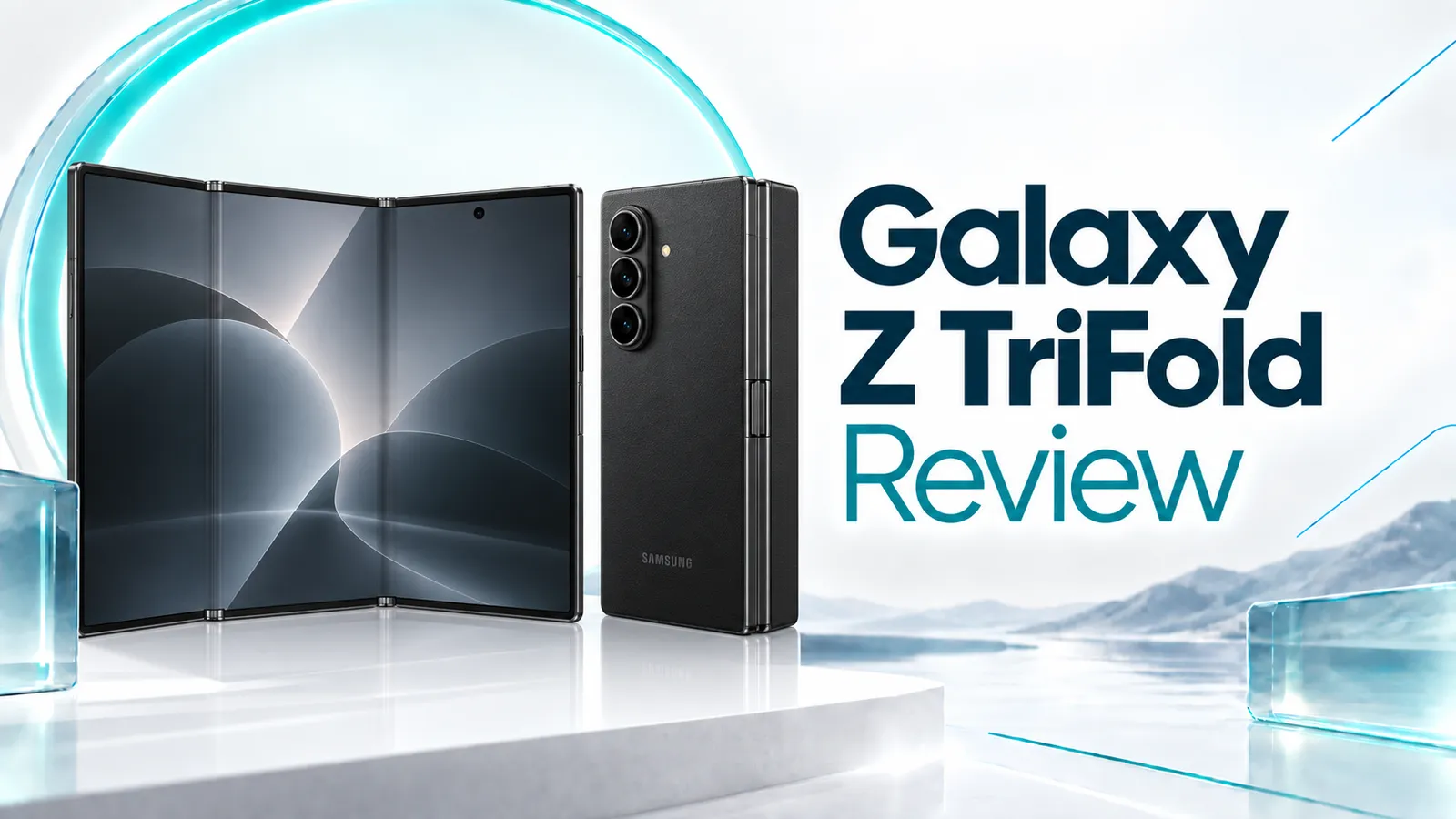
Samsung's Galaxy Z TriFold launched in South Korea in December 2025 and reached the US in January 2026 at $2,899, with a 10-inch inner display made from three folding panels, a 200MP camera, and a 5600 mAh battery. Reviewers were genuinely impressed by the build quality and the huge inner screen, but by March 2026, Samsung had already discontinued it. A final restock sold out in April 2026, and it hasn't been available from Samsung since. If you're considering one now, you're looking at grey-market import or resale prices well above what it originally cost. Here's the full picture before you spend that kind of money.
Samsung's Tri-Fold Experiment, and Why It's Already Over
Samsung unveiled the Galaxy Z TriFold on December 1, 2025, and it went on sale in South Korea on December 12, 2025, priced at 3,594,000 KRW, or roughly $2,400. It sold out within minutes, a result of Samsung deliberately limiting production rather than a sign of overwhelming demand outpacing a normal supply run. The phone reached Singapore and the UAE a week later, Taiwan shortly after that, and the US on January 30, 2026, at $2,899, Samsung's most expensive phone ever sold in America. The UK and the rest of Europe never got an official launch at all.
Then, on March 17, 2026, Samsung confirmed it would stop selling the Z TriFold in South Korea and the US once existing stock ran out, according to a Bloomberg report. That's just three months after the US launch. Reporting points to build cost and complexity, worsened by a RAM shortage that pushed component costs up, rather than weak sales, since the phone kept selling out everywhere it launched. Samsung did one final US restock on April 10, 2026, which also sold out within minutes, and there's been no restock since. Total global production is estimated at around 30,000 units.
If you're reading this because you're thinking about buying one, that context matters more than almost anything else in this review. This guide covers the full spec sheet, how the camera and durability actually hold up, how it compares to Samsung's own Z Fold lineup and to Huawei's rival tri-fold phones, and what your realistic options are if you still want one, including in Pakistan.
Main display: 10" Dynamic LTPO AMOLED 2X across three folding panels, 2160 x 1584, 120Hz, 1600 nits peak brightness
Chipset: Snapdragon 8 Elite for Galaxy (3nm)
RAM / Storage: 16GB RAM with 512GB or 1TB storage, UFS 4.1
Rear cameras: 200MP main + 12MP ultrawide + 10MP telephoto, up to 30x digital zoom
Written by the iSwap Team
iSwap.pk is Pakistan's marketplace for buying, selling, and swapping mobile phones. Our editorial team covers phone reviews, price guides, and buying tips to help you shop smarter. Learn more about us
Samsung's Galaxy Z TriFold launched in South Korea in December 2025 and reached the US in January 2026 at $2,899, with a 10-inch inner display made from three folding panels, a 200MP camera, and a 5600 mAh battery. Reviewers were genuinely impressed by the build quality and the huge inner screen, but by March 2026, Samsung had already discontinued it. A final restock sold out in April 2026, and it hasn't been available from Samsung since. If you're considering one now, you're looking at grey-market import or resale prices well above what it originally cost. Here's the full picture before you spend that kind of money.
Samsung's Tri-Fold Experiment, and Why It's Already Over
Samsung unveiled the Galaxy Z TriFold on December 1, 2025, and it went on sale in South Korea on December 12, 2025, priced at 3,594,000 KRW, or roughly $2,400. It sold out within minutes, a result of Samsung deliberately limiting production rather than a sign of overwhelming demand outpacing a normal supply run. The phone reached Singapore and the UAE a week later, Taiwan shortly after that, and the US on January 30, 2026, at $2,899, Samsung's most expensive phone ever sold in America. The UK and the rest of Europe never got an official launch at all.
Then, on March 17, 2026, Samsung confirmed it would stop selling the Z TriFold in South Korea and the US once existing stock ran out, according to a Bloomberg report. That's just three months after the US launch. Reporting points to build cost and complexity, worsened by a RAM shortage that pushed component costs up, rather than weak sales, since the phone kept selling out everywhere it launched. Samsung did one final US restock on April 10, 2026, which also sold out within minutes, and there's been no restock since. Total global production is estimated at around 30,000 units.
If you're reading this because you're thinking about buying one, that context matters more than almost anything else in this review. This guide covers the full spec sheet, how the camera and durability actually hold up, how it compares to Samsung's own Z Fold lineup and to Huawei's rival tri-fold phones, and what your realistic options are if you still want one, including in Pakistan.
Main display: 10" Dynamic LTPO AMOLED 2X across three folding panels, 2160 x 1584, 120Hz, 1600 nits peak brightness
Chipset: Snapdragon 8 Elite for Galaxy (3nm)
RAM / Storage: 16GB RAM with 512GB or 1TB storage, UFS 4.1
Rear cameras: 200MP main + 12MP ultrawide + 10MP telephoto, up to 30x digital zoom
Written by the iSwap Team
iSwap.pk is Pakistan's marketplace for buying, selling, and swapping mobile phones. Our editorial team covers phone reviews, price guides, and buying tips to help you shop smarter. Learn more about us
Dimensions: 159.2 x 214.1 x 3.9mm unfolded, 159.2 x 75.0 x 12.9mm folded
Weight: 309g
Colors: Crafted Black only, no other color options were ever offered
The hinge is the real engineering story here. Instead of one fold point, the Z TriFold uses two separate hinges built on Samsung's Armor FlexHinge platform, sized differently from each other to balance the uneven weight across three panels, according to Digital Trends. Both panels fold inward toward the center in a G-shape, which protects the main display when the phone is closed, but folding has to happen in a specific sequence, the inner hinge first, then the outer one, for everything to align correctly.
Does the Galaxy Z TriFold Have a Good Camera?
Yes, on paper it's one of the strongest camera systems Samsung has put in a foldable, with a 200MP main sensor backing up a 12MP ultrawide and a 10MP telephoto capable of up to 30x digital zoom. Reviewers generally found real-world results solid for a foldable in this category.
The bigger camera story is what's missing from the rest of the phone rather than the camera itself. The 12MP ultrawide is a noticeably older spec than what Samsung later shipped on the Galaxy Z Fold 8, which reportedly moved to a 50MP ultrawide, according to comparison coverage from thezfoldcase.com. If ultrawide quality matters to you specifically, that's worth knowing, though it's worth treating that specific figure as a single-source comparison until confirmed elsewhere.
How Durable Is It, Really?
This is where the Z TriFold's biggest weaknesses show up. Independent fold-cycle testing found one of its two hinges started creaking after 61,000 folds, the second after 121,000 folds, and hinge elasticity noticeably weakened by around 144,000 folds, a worse result than prior single-hinge Samsung foldables, according to SamMobile's durability testing.
The flexible inner display is arguably the bigger everyday risk. It scratches easily, rated around Mohs level 2, meaning something as ordinary as a fingernail, a key, or a coin in your pocket can mark it, a concern flagged by multiple outlets including Tom's Guide. With two fold points instead of one, there's also simply more hinge mechanism that could eventually wear down. On the plus side, reviewers who spent real time with the phone described the build as surprisingly sturdy in hand, and praised how Samsung balanced the weight across the three panels so the 309g mass doesn't feel as extreme as the number suggests, per Forbes' hands-on impressions.
One UI 8 added a "Split Trio" mode built specifically for running three apps at once across the tri-fold layout, which reviewers found genuinely more useful than the cramped multitasking on a standard Z Fold. The trade-off is that plenty of third-party apps weren't built for this aspect ratio, and Samsung's own support documentation lists real issues, including video calls dropping and screen rotation glitches, on apps that haven't been updated for it.
How Does It Compare to the Galaxy Z Fold Lineup?
Against the Galaxy Z Fold 7, the Z TriFold's headline advantage is screen size: a 10-inch inner display versus the Z Fold 7's 8 inches, a real difference in usable space. The trade-off is size and weight, since the Z TriFold is noticeably heavier and thicker folded (309g and 12.9mm, against roughly 215g for the Z Fold 7), according to Android Central's comparison. Both share the same Snapdragon 8 Elite platform and top out at 16GB RAM and 1TB storage, but the Z TriFold started around $900 more expensive.
Against the newer Galaxy Z Fold 8, the comparison flips in a few places. Reported figures suggest the Z Fold 8 reaches around 2,600 nits of peak brightness, well above the Z TriFold's 1,600 nits, even though its 8-inch inner screen is smaller than the Z TriFold's 10-inch panel. If you want the absolute largest screen Samsung has shipped in a foldable, the Z TriFold still wins on that one spec, but everywhere else, Samsung's regular Fold lineup has caught up or moved ahead since.
How Does It Compare to the Huawei Mate XT and Mate XTs?
Huawei got here first. The Mate XT launched in September 2024, more than a year before Samsung's tri-fold entry, giving Huawei a real head start in what's still an extremely niche category, according to PhoneArena's comparison.
The two phones fold in fundamentally different ways. Huawei's Mate XTs uses an outward-folding Z-shape with three usable screen states, a compact 6.4-inch mode, a half-open 7.9-inch mode, and a fully open 10.2-inch mode, while Samsung's Z TriFold folds inward in a G-shape that protects the main display when closed, per Android Central. Huawei also charges faster, at 66W wired and 50W wireless against Samsung's 45W and 15W, despite a similarly sized 5600 mAh battery. Where Samsung's phone has the edge is ecosystem and software maturity outside China, since the Mate XTs runs Huawei's own Kirin chipset and HarmonyOS rather than Android.
What Are the Pros and Cons of the Galaxy Z TriFold?
Pros:
Genuinely huge 10-inch inner display, the largest Samsung has shipped in a foldable
Strong 200MP main camera
Largest battery Samsung has put in a foldable, at 5600 mAh
Surprisingly well-balanced weight distribution for its size
"Split Trio" multitasking mode is a real, well-designed use of the extra screen space
Cons:
Discontinued since March 2026, with no confirmed restock plans
Only obtainable now through grey-market import or resale at inflated prices
Hinge durability tested worse than prior single-hinge Samsung foldables
Inner display scratches easily
Heavy and thick folded compared to standard foldables
Charging speed trails newer foldables and rivals like Huawei's Mate XTs
Only one color was ever offered
Some third-party apps aren't optimized for the unusual triple-panel layout
Can You Even Buy One in Pakistan?
Not through any official channel. Samsung never launched the Z TriFold in Pakistan, and every price listed for it locally is an unofficial import estimate rather than a confirmed retail price. Some Pakistani retailers list it explicitly as a non-PTA import, with figures ranging roughly from Rs 639,999 to Rs 699,999, but treat those as rough estimates rather than a real price you'd pay at checkout.
Given that Samsung has fully discontinued the phone and resale prices internationally have climbed to $3,500 to $4,400, well above its original $2,899 US price, expect any unit available in Pakistan to be a personal or grey-market import priced accordingly. If you go this route, verify PTA and DIRBS registration status before paying, since a non-PTA unit can't be used on local networks long term.
Conclusion
The Galaxy Z TriFold was a genuinely ambitious phone. The 10-inch inner display, the strong camera, and the largest battery Samsung has ever put in a foldable all point to a company willing to push past the standard book-style fold. It's also already a discontinued product, gone from the market barely three months after its US launch, with real durability concerns around its dual-hinge design and an easily scratched inner panel.
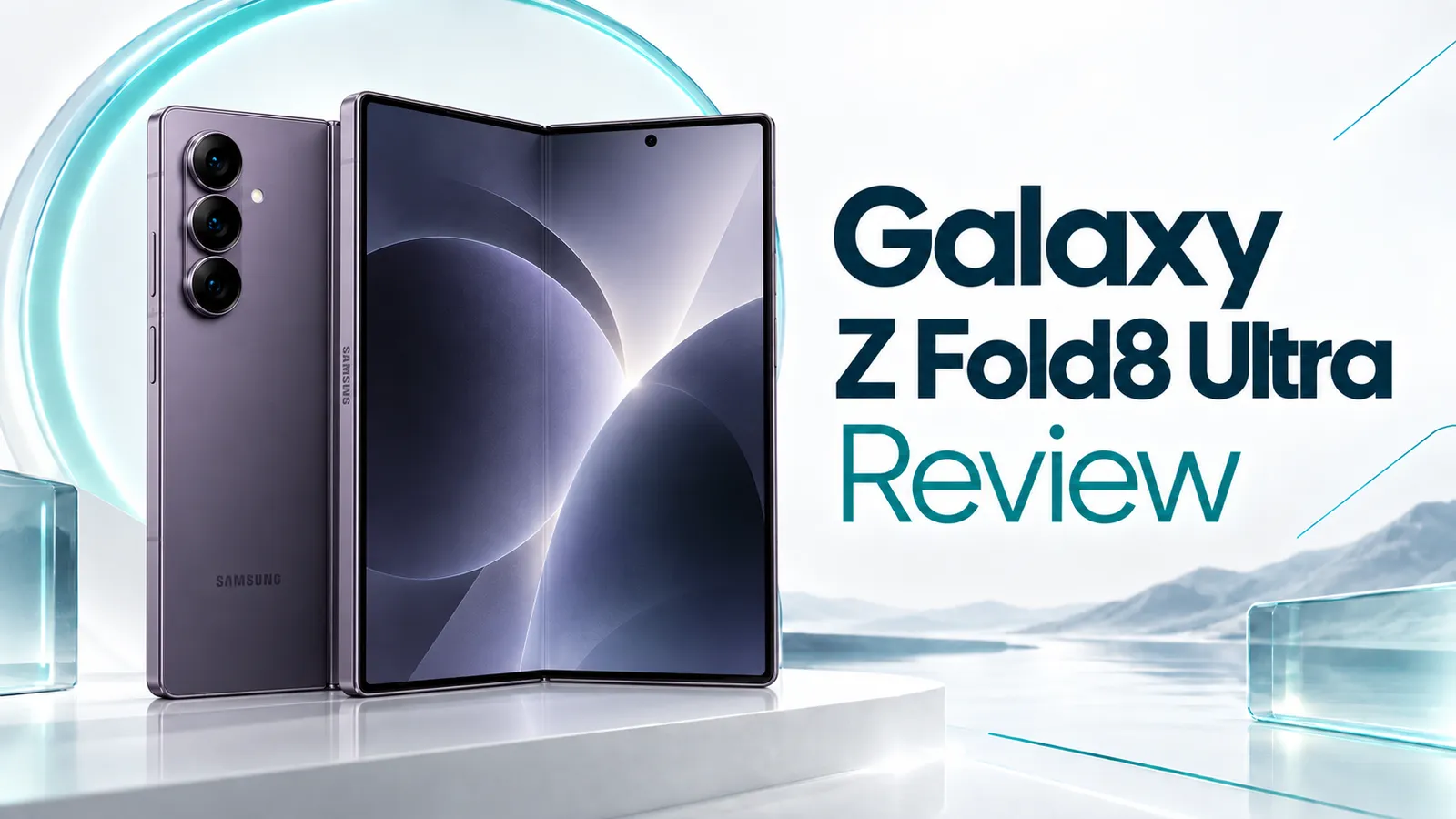
For most buyers, this isn't a phone you can simply decide to buy anymore. If you specifically want a Samsung foldable today, the Galaxy Z Fold 8 and Galaxy Z Fold 8 Ultra are both actually available, more refined in several ways, and don't require paying a resale premium to own.
Only if you specifically want the tri-fold form factor and are prepared to pay a resale premium, since Samsung has discontinued it. For most buyers, Samsung's regular Z Fold lineup offers a more practical, currently available alternative.
Can you still buy a Galaxy Z TriFold in 2026?
Not from Samsung. It was discontinued in March 2026, got one final restock in April 2026 that sold out immediately, and hasn't been available since. Any unit you find now is a resale or grey-market import.
Why did Samsung discontinue the Galaxy Z TriFold?
Reporting points to high build cost and complexity, made worse by a RAM shortage that pushed component costs up further, rather than weak demand. The phone sold out at every launch before Samsung pulled it from sale.
How durable is the Galaxy Z TriFold's hinge?
Independent testing found one of its two hinges began creaking after 61,000 folds and showed weakened elasticity by around 144,000 folds, a worse result than earlier single-hinge Samsung foldables. The inner display also scratches easily.
How does the Galaxy Z TriFold compare to the Galaxy Z Fold 8?
The Z TriFold has a larger 10-inch inner display, but the Z Fold 8 reportedly reaches higher peak brightness and is more practical to use day to day, without the resale markup that now comes with buying a discontinued phone.
Is the Galaxy Z TriFold available in Pakistan?
Not officially. Samsung never launched it there, so any unit sold locally is an unofficial, non-PTA import, and listed prices should be treated as rough estimates rather than confirmed figures.
Front cameras: 10MP on both the cover screen and the inner display
Battery: 5600 mAh, a three-cell design and Samsung's largest-ever foldable battery
Dimensions: 159.2 x 214.1 x 3.9mm unfolded, 159.2 x 75.0 x 12.9mm folded
Weight: 309g
Colors: Crafted Black only, no other color options were ever offered
The hinge is the real engineering story here. Instead of one fold point, the Z TriFold uses two separate hinges built on Samsung's Armor FlexHinge platform, sized differently from each other to balance the uneven weight across three panels, according to Digital Trends. Both panels fold inward toward the center in a G-shape, which protects the main display when the phone is closed, but folding has to happen in a specific sequence, the inner hinge first, then the outer one, for everything to align correctly.
Does the Galaxy Z TriFold Have a Good Camera?
Yes, on paper it's one of the strongest camera systems Samsung has put in a foldable, with a 200MP main sensor backing up a 12MP ultrawide and a 10MP telephoto capable of up to 30x digital zoom. Reviewers generally found real-world results solid for a foldable in this category.
The bigger camera story is what's missing from the rest of the phone rather than the camera itself. The 12MP ultrawide is a noticeably older spec than what Samsung later shipped on the Galaxy Z Fold 8, which reportedly moved to a 50MP ultrawide, according to comparison coverage from thezfoldcase.com. If ultrawide quality matters to you specifically, that's worth knowing, though it's worth treating that specific figure as a single-source comparison until confirmed elsewhere.
How Durable Is It, Really?
This is where the Z TriFold's biggest weaknesses show up. Independent fold-cycle testing found one of its two hinges started creaking after 61,000 folds, the second after 121,000 folds, and hinge elasticity noticeably weakened by around 144,000 folds, a worse result than prior single-hinge Samsung foldables, according to SamMobile's durability testing.
The flexible inner display is arguably the bigger everyday risk. It scratches easily, rated around Mohs level 2, meaning something as ordinary as a fingernail, a key, or a coin in your pocket can mark it, a concern flagged by multiple outlets including Tom's Guide. With two fold points instead of one, there's also simply more hinge mechanism that could eventually wear down. On the plus side, reviewers who spent real time with the phone described the build as surprisingly sturdy in hand, and praised how Samsung balanced the weight across the three panels so the 309g mass doesn't feel as extreme as the number suggests, per Forbes' hands-on impressions.
One UI 8 added a "Split Trio" mode built specifically for running three apps at once across the tri-fold layout, which reviewers found genuinely more useful than the cramped multitasking on a standard Z Fold. The trade-off is that plenty of third-party apps weren't built for this aspect ratio, and Samsung's own support documentation lists real issues, including video calls dropping and screen rotation glitches, on apps that haven't been updated for it.
How Does It Compare to the Galaxy Z Fold Lineup?
Against the Galaxy Z Fold 7, the Z TriFold's headline advantage is screen size: a 10-inch inner display versus the Z Fold 7's 8 inches, a real difference in usable space. The trade-off is size and weight, since the Z TriFold is noticeably heavier and thicker folded (309g and 12.9mm, against roughly 215g for the Z Fold 7), according to Android Central's comparison. Both share the same Snapdragon 8 Elite platform and top out at 16GB RAM and 1TB storage, but the Z TriFold started around $900 more expensive.
Against the newer Galaxy Z Fold 8, the comparison flips in a few places. Reported figures suggest the Z Fold 8 reaches around 2,600 nits of peak brightness, well above the Z TriFold's 1,600 nits, even though its 8-inch inner screen is smaller than the Z TriFold's 10-inch panel. If you want the absolute largest screen Samsung has shipped in a foldable, the Z TriFold still wins on that one spec, but everywhere else, Samsung's regular Fold lineup has caught up or moved ahead since.
How Does It Compare to the Huawei Mate XT and Mate XTs?
Huawei got here first. The Mate XT launched in September 2024, more than a year before Samsung's tri-fold entry, giving Huawei a real head start in what's still an extremely niche category, according to PhoneArena's comparison.
The two phones fold in fundamentally different ways. Huawei's Mate XTs uses an outward-folding Z-shape with three usable screen states, a compact 6.4-inch mode, a half-open 7.9-inch mode, and a fully open 10.2-inch mode, while Samsung's Z TriFold folds inward in a G-shape that protects the main display when closed, per Android Central. Huawei also charges faster, at 66W wired and 50W wireless against Samsung's 45W and 15W, despite a similarly sized 5600 mAh battery. Where Samsung's phone has the edge is ecosystem and software maturity outside China, since the Mate XTs runs Huawei's own Kirin chipset and HarmonyOS rather than Android.
What Are the Pros and Cons of the Galaxy Z TriFold?
Pros:
Genuinely huge 10-inch inner display, the largest Samsung has shipped in a foldable
Strong 200MP main camera
Largest battery Samsung has put in a foldable, at 5600 mAh
Surprisingly well-balanced weight distribution for its size
"Split Trio" multitasking mode is a real, well-designed use of the extra screen space
Cons:
Discontinued since March 2026, with no confirmed restock plans
Only obtainable now through grey-market import or resale at inflated prices
Hinge durability tested worse than prior single-hinge Samsung foldables
Inner display scratches easily
Heavy and thick folded compared to standard foldables
Charging speed trails newer foldables and rivals like Huawei's Mate XTs
Only one color was ever offered
Some third-party apps aren't optimized for the unusual triple-panel layout
Can You Even Buy One in Pakistan?
Not through any official channel. Samsung never launched the Z TriFold in Pakistan, and every price listed for it locally is an unofficial import estimate rather than a confirmed retail price. Some Pakistani retailers list it explicitly as a non-PTA import, with figures ranging roughly from Rs 639,999 to Rs 699,999, but treat those as rough estimates rather than a real price you'd pay at checkout.
Given that Samsung has fully discontinued the phone and resale prices internationally have climbed to $3,500 to $4,400, well above its original $2,899 US price, expect any unit available in Pakistan to be a personal or grey-market import priced accordingly. If you go this route, verify PTA and DIRBS registration status before paying, since a non-PTA unit can't be used on local networks long term.
Conclusion
The Galaxy Z TriFold was a genuinely ambitious phone. The 10-inch inner display, the strong camera, and the largest battery Samsung has ever put in a foldable all point to a company willing to push past the standard book-style fold. It's also already a discontinued product, gone from the market barely three months after its US launch, with real durability concerns around its dual-hinge design and an easily scratched inner panel.
For most buyers, this isn't a phone you can simply decide to buy anymore. If you specifically want a Samsung foldable today, the Galaxy Z Fold 8 and Galaxy Z Fold 8 Ultra are both actually available, more refined in several ways, and don't require paying a resale premium to own.
Only if you specifically want the tri-fold form factor and are prepared to pay a resale premium, since Samsung has discontinued it. For most buyers, Samsung's regular Z Fold lineup offers a more practical, currently available alternative.
Can you still buy a Galaxy Z TriFold in 2026?
Not from Samsung. It was discontinued in March 2026, got one final restock in April 2026 that sold out immediately, and hasn't been available since. Any unit you find now is a resale or grey-market import.
Why did Samsung discontinue the Galaxy Z TriFold?
Reporting points to high build cost and complexity, made worse by a RAM shortage that pushed component costs up further, rather than weak demand. The phone sold out at every launch before Samsung pulled it from sale.
How durable is the Galaxy Z TriFold's hinge?
Independent testing found one of its two hinges began creaking after 61,000 folds and showed weakened elasticity by around 144,000 folds, a worse result than earlier single-hinge Samsung foldables. The inner display also scratches easily.
How does the Galaxy Z TriFold compare to the Galaxy Z Fold 8?
The Z TriFold has a larger 10-inch inner display, but the Z Fold 8 reportedly reaches higher peak brightness and is more practical to use day to day, without the resale markup that now comes with buying a discontinued phone.
Is the Galaxy Z TriFold available in Pakistan?
Not officially. Samsung never launched it there, so any unit sold locally is an unofficial, non-PTA import, and listed prices should be treated as rough estimates rather than confirmed figures.