Samsung Galaxy S26+ specs, camera and battery tests six months later, price in Pakistan, and how it compares to the Galaxy S26 Ultra and Pixel 10 Pro.
Samsung Galaxy S26+ specs, camera and battery tests six months later, price in Pakistan, and how it compares to the Galaxy S26 Ultra and Pixel 10 Pro.

iSwap.pk is Pakistan's marketplace for buying, selling, and swapping mobile phones. Our editorial team covers phone reviews, price guides, and buying tips to help you shop smarter. Learn more about us
Loading comments…
iSwap.pk is Pakistan's marketplace for buying, selling, and swapping mobile phones. Our editorial team covers phone reviews, price guides, and buying tips to help you shop smarter. Learn more about us
Loading comments…
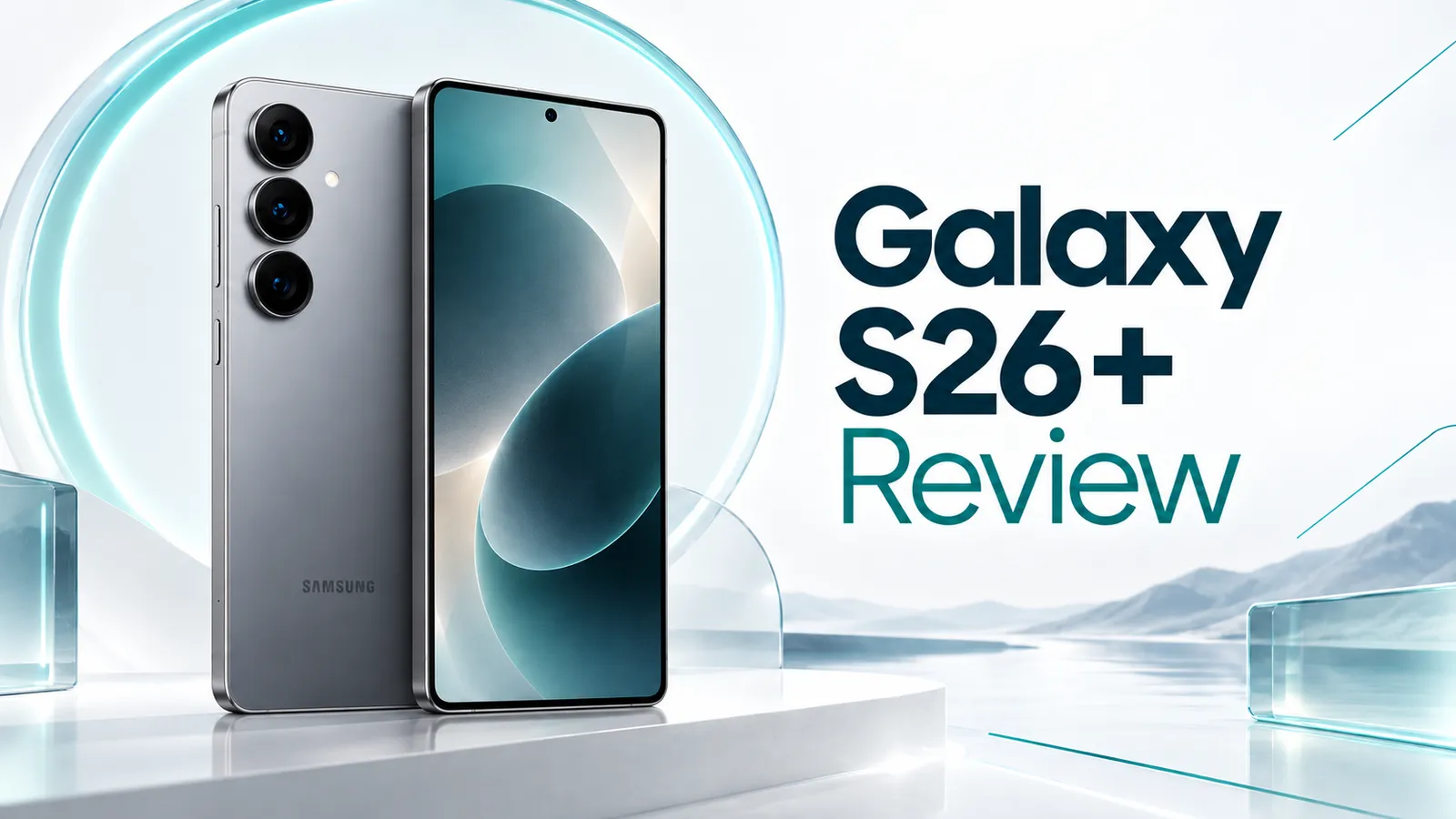
Samsung launched the Galaxy S26+ in March 2026 with a 6.7 inch display, the same Snapdragon 8 Elite Gen 5 chip as the Galaxy S26 Ultra in some regions, a 4900 mAh battery, and 45W charging. Reviewers are genuinely split on it. Some call it a great all-around phone, while others say it sits too close in price to the Ultra to make sense. The camera hardware is basically unchanged from the Galaxy S25+, and depending on where you buy it, you might get an Exynos chip instead of a Snapdragon one. Here's the full breakdown before you decide.
Few recent Samsung phones have split reviewers quite like the Galaxy S26+. PhoneArena's own review is titled "a perfectly good phone with no reason to exist," yet the site later published a separate opinion piece called "You should get the Galaxy S26 Plus". TechRadar called it "either someone's goldilocks phone or the forgotten middle child," and Tom's Guide summed it up as "a great phone that few people will actually want."
That tension makes sense once you see the pricing. Android Authority's review points out that only about $200 separates the Galaxy S26+ from the Galaxy S26 Ultra, which gets a far better camera system, a bigger battery, faster charging, and the S Pen. That leaves the Plus in a strange spot: not cheap enough to feel like a bargain, not different enough from the Ultra to feel essential.
This guide covers the full spec sheet, how the camera and battery hold up six months in, whether upgrading from a Galaxy S25+ makes sense, how it stacks up against the Galaxy S26 Ultra and Google Pixel 10 Pro, and what to expect on price in Pakistan.
Here's the full spec sheet, based on GSMArena's listing:
The chip situation is the detail most buyers miss. If you're in a Snapdragon region, you get class-leading performance. If your unit ships with the Exynos 2600 instead, which is common across most of Asia, performance and battery efficiency can differ noticeably, per Android Authority's breakdown. It's worth checking which chip your specific unit has before buying.
The Galaxy S26+ has a good, but not exciting, camera. The core hardware, a 50MP main sensor, a 10MP telephoto, and a 12MP ultrawide, is essentially unchanged from the Galaxy S25+, according to Gizmochina's generation comparison. Android Authority's review calls this the phone's weakest point at its price, especially since rivals have moved the camera conversation forward while this setup has stayed mostly the same for a few generations.
Where it does hold up is closer zoom ranges. GSMArena's head-to-head against the Galaxy S26 Ultra found photo quality roughly matches the Ultra up to 3x zoom, so if you rarely zoom in further than that, you're not giving up much by choosing the cheaper phone. Past 3x, the Ultra's periscope telephoto lens pulls well ahead.
The Galaxy S26+'s 4900 mAh battery gets you through a full day of normal use, but reviewers describe it as solid rather than standout. PhoneArena's lab testing measured about 18 hours and 23 minutes in a web browsing battery test, and both PhoneArena and Android Authority describe real-world battery life as "decent" or "adequate," not class-leading. Charging is on the slower side too: 45W wired charging reaches about 69% in 30 minutes, unchanged from the Galaxy S25+ and well behind the Galaxy S26 Ultra's 60W, per SamMobile.
There's a longer-term detail worth knowing too. An EU battery energy label reportedly rates the Galaxy S26+ for only 1,200 charge cycles before it drops to 80% health, down from 2,000 cycles on the Galaxy S25+, the same regression Samsung applied across this generation, according to SamMobile's report on the leaked labels. That's a single regulatory-label source rather than independent lab testing, but it's worth factoring in if you plan to keep the phone for several years.
For most Galaxy S25+ owners, there isn't much reason to upgrade. The display size and resolution, RAM and storage tiers, camera hardware, and even the 4900 mAh battery and 45W charging speed are all unchanged from last year, based on GSMArena's generation comparison. The real update is the new chipset, along with a mildly refreshed curved-edge design.
That would be an easier sell if the price had stayed the same, but it didn't. The Galaxy S26+ launched $100 higher than the Galaxy S25+ did, without a storage bump to match, a jump Gizmochina calls hard to justify given how small the actual changes are.
If you want the best camera, the S Pen, or the fastest charging, get the Galaxy S26 Ultra. If none of those matter much to you, the Galaxy S26+ covers the basics well for less money.
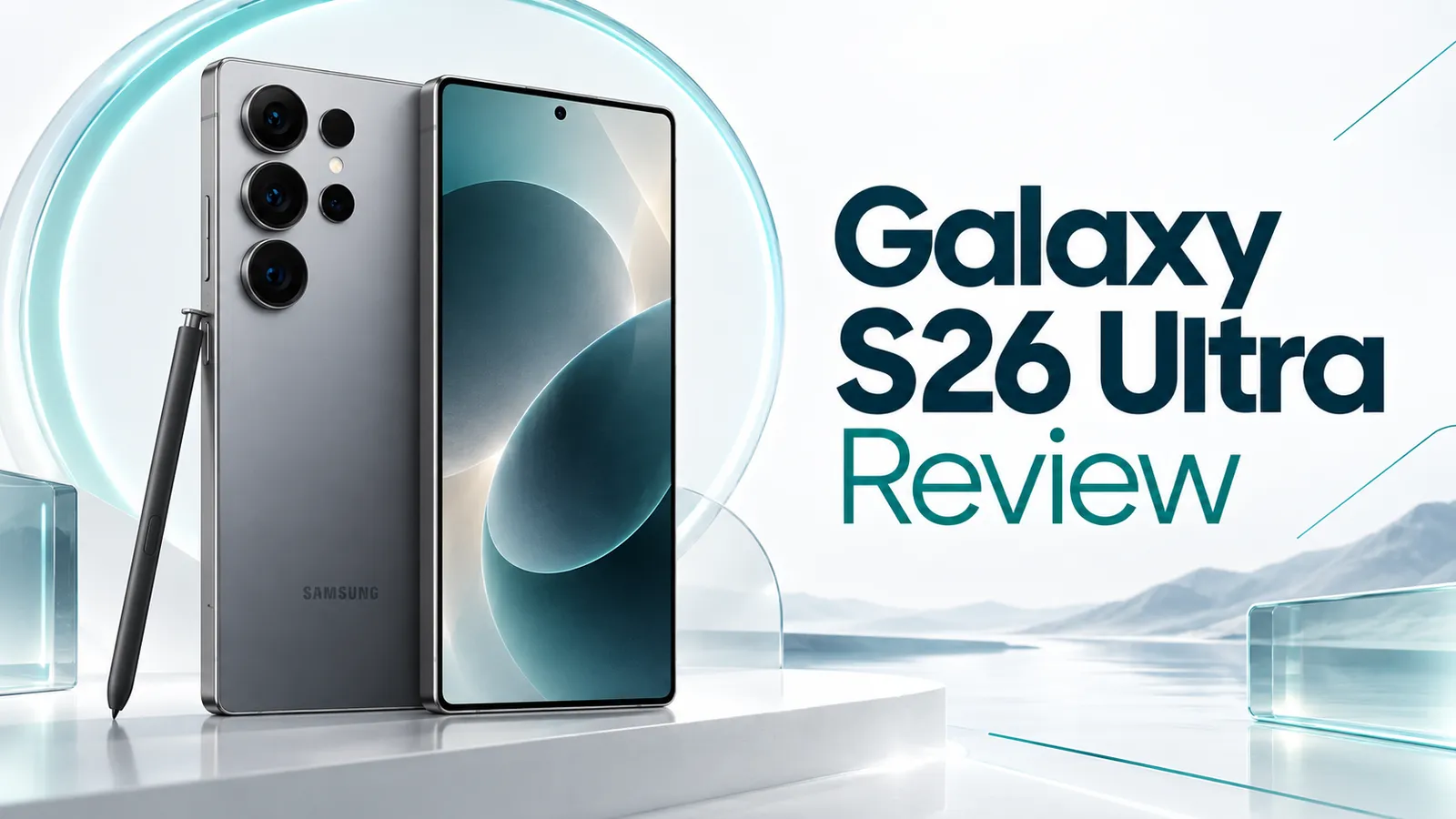
The two phones are closer than you'd expect in day-to-day use. We covered the Ultra in full in our Galaxy S26 Ultra review, but here's the short version of the gap: the Ultra has a 200MP main camera with a much longer zoom range and Samsung's new Privacy Display, a larger 5000 mAh battery with 60W charging, and the S Pen, none of which the Plus offers. The Galaxy S26+'s advantage is simply cost, since the gap between the two is only around $200 despite the feature difference.
If you're also considering something outside Samsung's lineup, the Google Pixel 10 Pro starts around $100 less than the Galaxy S26+ and matches it on main camera resolution, though the Galaxy pulls ahead on raw benchmark performance, according to PhoneArena's spec comparison.
Pros:
Cons:
Prices for the Galaxy S26+ vary noticeably between retailers right now. WhatMobile lists the 256GB model at around Rs 364,999, while Priceoye shows listings as low as Rs 326,999 for the same storage tier. Reported prices for the 256GB model range roughly from Rs 315,000 to Rs 365,000 depending on the retailer and when you check, so treat any single figure as a starting point rather than a fixed price.
As with any imported flagship, confirm PTA registration status before buying, since unregistered units are sometimes priced lower but can't be used on local networks long term. The safest way to get a current number is to check Samsung phone listings in Pakistan directly.
The Galaxy S26+ is a genuinely solid phone. The display is excellent, performance is strong if you land a Snapdragon unit, and it holds its own against the pricier Galaxy S26 Ultra up to 3x zoom. Its problem isn't quality, it's positioning. The camera hasn't meaningfully changed in a few generations, charging is slow next to the Ultra, and the price gap between the two phones is small enough that the Ultra often looks like the better deal.
If you don't need the S Pen, a longer zoom range, or the fastest charging around, the Galaxy S26+ is a reasonable choice. If you can stretch your budget a bit further, it's worth comparing it directly against the Galaxy S26 Ultra or the iPhone 17 Pro Max before you commit.
Ready to see what's actually available near you? Browse phones on iSwap.pk to compare live listings, or sell or swap your current phone to help fund the upgrade. If a smaller, cheaper Galaxy is more your speed, here's what we know about the Galaxy S26 FE.
It depends on your budget. It's a well-rounded phone with a great display and strong performance, but reviewers are split since it sits close in price to the more capable Galaxy S26 Ultra.
Choose the Ultra if you want the S Pen, a longer camera zoom range, or faster charging. Choose the Galaxy S26+ if you want the same display quality and strong performance for less money and don't need those extras.
Probably not. The display, camera, battery, and charging speed are essentially unchanged from the Galaxy S25+. The main difference is the new chipset, which doesn't fully justify the $100 price increase for most owners.
No. The S Pen is exclusive to the Galaxy S26 Ultra in this generation.
It depends on your region. The US, Canada, China, and Japan get the Snapdragon 8 Elite Gen 5, while Europe, South Korea, and most of Asia get the Exynos 2600 instead.
Retail prices vary by source, with some listings starting around Rs 326,999 to Rs 364,999 for the 256GB model. Check a current listing before buying, and confirm PTA registration status if you're importing one yourself.
Samsung launched the Galaxy S26+ in March 2026 with a 6.7 inch display, the same Snapdragon 8 Elite Gen 5 chip as the Galaxy S26 Ultra in some regions, a 4900 mAh battery, and 45W charging. Reviewers are genuinely split on it. Some call it a great all-around phone, while others say it sits too close in price to the Ultra to make sense. The camera hardware is basically unchanged from the Galaxy S25+, and depending on where you buy it, you might get an Exynos chip instead of a Snapdragon one. Here's the full breakdown before you decide.
Few recent Samsung phones have split reviewers quite like the Galaxy S26+. PhoneArena's own review is titled "a perfectly good phone with no reason to exist," yet the site later published a separate opinion piece called "You should get the Galaxy S26 Plus". TechRadar called it "either someone's goldilocks phone or the forgotten middle child," and Tom's Guide summed it up as "a great phone that few people will actually want."
That tension makes sense once you see the pricing. Android Authority's review points out that only about $200 separates the Galaxy S26+ from the Galaxy S26 Ultra, which gets a far better camera system, a bigger battery, faster charging, and the S Pen. That leaves the Plus in a strange spot: not cheap enough to feel like a bargain, not different enough from the Ultra to feel essential.
This guide covers the full spec sheet, how the camera and battery hold up six months in, whether upgrading from a Galaxy S25+ makes sense, how it stacks up against the Galaxy S26 Ultra and Google Pixel 10 Pro, and what to expect on price in Pakistan.
Here's the full spec sheet, based on GSMArena's listing:
The chip situation is the detail most buyers miss. If you're in a Snapdragon region, you get class-leading performance. If your unit ships with the Exynos 2600 instead, which is common across most of Asia, performance and battery efficiency can differ noticeably, per Android Authority's breakdown. It's worth checking which chip your specific unit has before buying.
The Galaxy S26+ has a good, but not exciting, camera. The core hardware, a 50MP main sensor, a 10MP telephoto, and a 12MP ultrawide, is essentially unchanged from the Galaxy S25+, according to Gizmochina's generation comparison. Android Authority's review calls this the phone's weakest point at its price, especially since rivals have moved the camera conversation forward while this setup has stayed mostly the same for a few generations.
Where it does hold up is closer zoom ranges. GSMArena's head-to-head against the Galaxy S26 Ultra found photo quality roughly matches the Ultra up to 3x zoom, so if you rarely zoom in further than that, you're not giving up much by choosing the cheaper phone. Past 3x, the Ultra's periscope telephoto lens pulls well ahead.
The Galaxy S26+'s 4900 mAh battery gets you through a full day of normal use, but reviewers describe it as solid rather than standout. PhoneArena's lab testing measured about 18 hours and 23 minutes in a web browsing battery test, and both PhoneArena and Android Authority describe real-world battery life as "decent" or "adequate," not class-leading. Charging is on the slower side too: 45W wired charging reaches about 69% in 30 minutes, unchanged from the Galaxy S25+ and well behind the Galaxy S26 Ultra's 60W, per SamMobile.
There's a longer-term detail worth knowing too. An EU battery energy label reportedly rates the Galaxy S26+ for only 1,200 charge cycles before it drops to 80% health, down from 2,000 cycles on the Galaxy S25+, the same regression Samsung applied across this generation, according to SamMobile's report on the leaked labels. That's a single regulatory-label source rather than independent lab testing, but it's worth factoring in if you plan to keep the phone for several years.
For most Galaxy S25+ owners, there isn't much reason to upgrade. The display size and resolution, RAM and storage tiers, camera hardware, and even the 4900 mAh battery and 45W charging speed are all unchanged from last year, based on GSMArena's generation comparison. The real update is the new chipset, along with a mildly refreshed curved-edge design.
That would be an easier sell if the price had stayed the same, but it didn't. The Galaxy S26+ launched $100 higher than the Galaxy S25+ did, without a storage bump to match, a jump Gizmochina calls hard to justify given how small the actual changes are.
If you want the best camera, the S Pen, or the fastest charging, get the Galaxy S26 Ultra. If none of those matter much to you, the Galaxy S26+ covers the basics well for less money.
The two phones are closer than you'd expect in day-to-day use. We covered the Ultra in full in our Galaxy S26 Ultra review, but here's the short version of the gap: the Ultra has a 200MP main camera with a much longer zoom range and Samsung's new Privacy Display, a larger 5000 mAh battery with 60W charging, and the S Pen, none of which the Plus offers. The Galaxy S26+'s advantage is simply cost, since the gap between the two is only around $200 despite the feature difference.
If you're also considering something outside Samsung's lineup, the Google Pixel 10 Pro starts around $100 less than the Galaxy S26+ and matches it on main camera resolution, though the Galaxy pulls ahead on raw benchmark performance, according to PhoneArena's spec comparison.
Pros:
Cons:
Prices for the Galaxy S26+ vary noticeably between retailers right now. WhatMobile lists the 256GB model at around Rs 364,999, while Priceoye shows listings as low as Rs 326,999 for the same storage tier. Reported prices for the 256GB model range roughly from Rs 315,000 to Rs 365,000 depending on the retailer and when you check, so treat any single figure as a starting point rather than a fixed price.
As with any imported flagship, confirm PTA registration status before buying, since unregistered units are sometimes priced lower but can't be used on local networks long term. The safest way to get a current number is to check Samsung phone listings in Pakistan directly.
The Galaxy S26+ is a genuinely solid phone. The display is excellent, performance is strong if you land a Snapdragon unit, and it holds its own against the pricier Galaxy S26 Ultra up to 3x zoom. Its problem isn't quality, it's positioning. The camera hasn't meaningfully changed in a few generations, charging is slow next to the Ultra, and the price gap between the two phones is small enough that the Ultra often looks like the better deal.
If you don't need the S Pen, a longer zoom range, or the fastest charging around, the Galaxy S26+ is a reasonable choice. If you can stretch your budget a bit further, it's worth comparing it directly against the Galaxy S26 Ultra or the iPhone 17 Pro Max before you commit.
Ready to see what's actually available near you? Browse phones on iSwap.pk to compare live listings, or sell or swap your current phone to help fund the upgrade. If a smaller, cheaper Galaxy is more your speed, here's what we know about the Galaxy S26 FE.
It depends on your budget. It's a well-rounded phone with a great display and strong performance, but reviewers are split since it sits close in price to the more capable Galaxy S26 Ultra.
Choose the Ultra if you want the S Pen, a longer camera zoom range, or faster charging. Choose the Galaxy S26+ if you want the same display quality and strong performance for less money and don't need those extras.
Probably not. The display, camera, battery, and charging speed are essentially unchanged from the Galaxy S25+. The main difference is the new chipset, which doesn't fully justify the $100 price increase for most owners.
No. The S Pen is exclusive to the Galaxy S26 Ultra in this generation.
It depends on your region. The US, Canada, China, and Japan get the Snapdragon 8 Elite Gen 5, while Europe, South Korea, and most of Asia get the Exynos 2600 instead.
Retail prices vary by source, with some listings starting around Rs 326,999 to Rs 364,999 for the 256GB model. Check a current listing before buying, and confirm PTA registration status if you're importing one yourself.