A blacklisted phone can look and work fine, then lose service without warning. See what "bad ESN" means, how to check before you buy, and what to do if it's too late.
A blacklisted phone can look and work fine, then lose service without warning. See what "bad ESN" means, how to check before you buy, and what to do if it's too late.

iSwap.pk is Pakistan's marketplace for buying, selling, and swapping mobile phones. Our editorial team covers phone reviews, price guides, and buying tips to help you shop smarter. Learn more about us
Loading comments…
iSwap.pk is Pakistan's marketplace for buying, selling, and swapping mobile phones. Our editorial team covers phone reviews, price guides, and buying tips to help you shop smarter. Learn more about us
Loading comments…
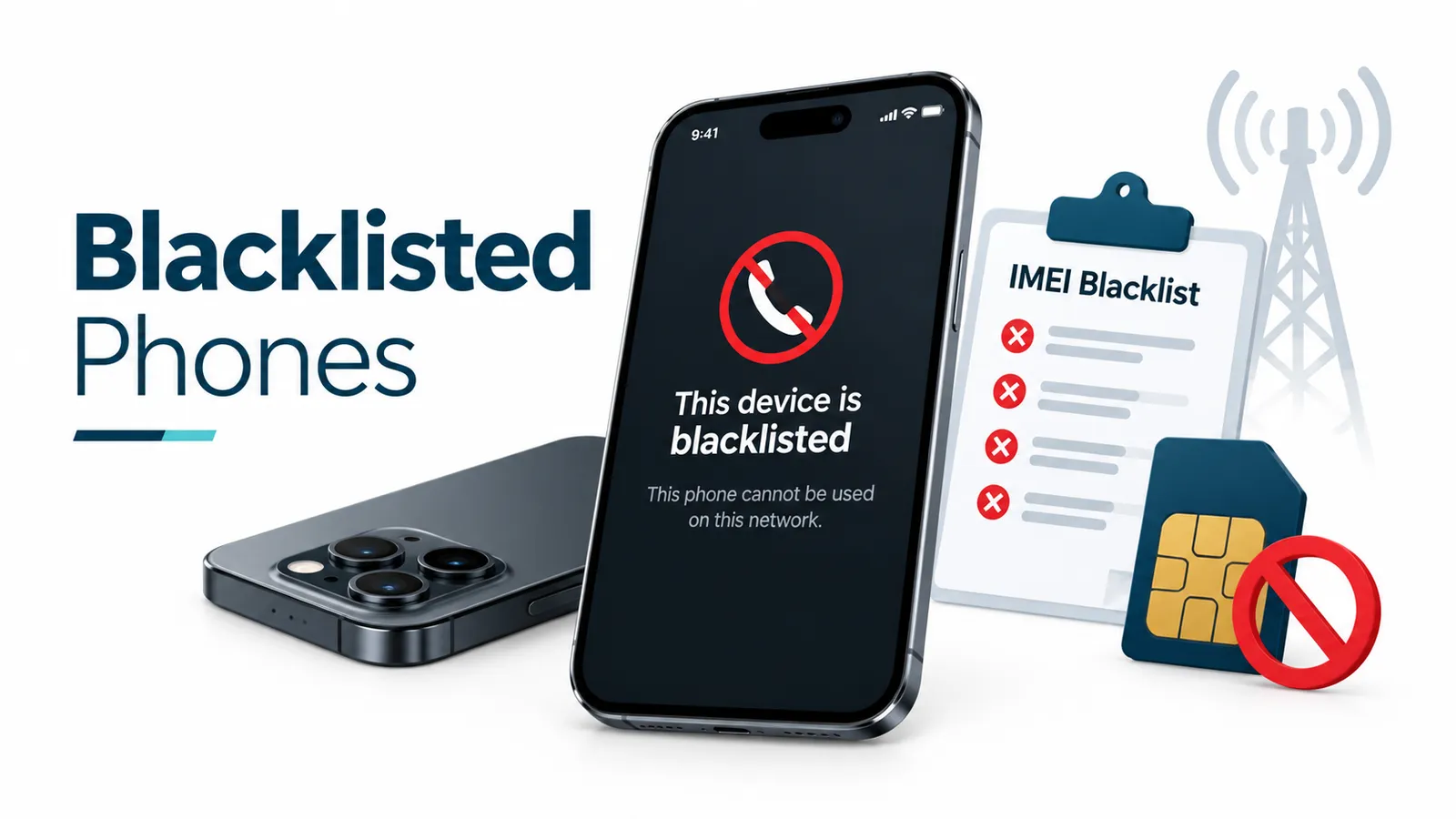
A blacklisted phone has been flagged by carriers as stolen, reported lost, or tied to unpaid financing, and it can lose service entirely, sometimes weeks after you bought it looking perfectly clean. This guide covers what "blacklisted" and "bad ESN" actually mean, how a phone can turn blacklisted after the sale, how to check before you buy (in the US and Pakistan), whether a blacklisted phone can ever be fixed, and what to actually do if you already bought one.
The phone worked perfectly for three weeks. Calls connected, data loaded, everything looked completely normal. Then one morning, no signal, no explanation, and a support rep tells you the device is blacklisted. This happens to real buyers constantly, and the scary part is that it has nothing to do with anything you did wrong.
A blacklisted phone isn't broken in any way you could have spotted by testing it. The hardware works fine. The problem lives in a database somewhere, tied to that phone's unique ID number, and it can trigger weeks or even months after a sale goes through. This guide breaks down what "blacklisted" and "bad ESN" actually mean, how a seemingly clean phone can turn blacklisted after you've already paid, how to check before you hand over any money, and what real options you have if it's already too late.
A blacklisted phone has been flagged in a shared carrier or industry database as stolen, reported lost, tied to fraud, or linked to an unpaid bill, and once flagged, it gets blocked from activating on any network that checks that database. BankMyCell explains that this happens through your phone's IMEI, a unique 15-digit number every cellular device carries, dialed up with *#06# on any phone.
Globally, carriers share this information through the GSMA's blacklist database, described by iunlocker.com as a shared registry that participating carriers around the world check before activating a device. In Pakistan, the same basic idea runs through PTA's own system instead. Once an IMEI shows up flagged, it doesn't matter which carrier or SIM you try, the phone simply won't connect to mobile service.
It's worth separating this from a simple carrier lock, which is a different and much less serious issue. A carrier-locked phone only works with one specific carrier's SIM cards until it's unlocked, but it still activates and functions normally. A blacklisted phone won't reliably connect to any carrier at all, locked or unlocked, since the block applies to the device itself rather than to a single network's SIM restriction.
Yes, "bad ESN" and "blacklisted" describe the same underlying problem, just using terminology from two different eras of US cell networks. There's no meaningful technical difference you need to worry about between the two terms.
ESN (Electronic Serial Number) was the identifier used on older CDMA networks, the kind Verizon and Sprint ran before everyone standardized on IMEI. Swappa's explainer notes that even though IMEI is now the universal identifier across all networks, "bad ESN" stuck around as slang, especially among US resellers and trade-in shops, simply meaning the device has been flagged the same way a blacklisted IMEI has. If you see either term used in a listing or a seller's explanation, treat them as interchangeable warning signs.
Here's the part that catches most buyers off guard: a phone can check completely clean at the moment of sale and still turn blacklisted weeks later, through no fault of the buyer at all.
Industry estimates cited by Swappa put the number of US phones with an outstanding installment balance at over 10 million at any given time. The scam works like this: someone buys a phone on a 24-month carrier installment plan, sells it privately after a few months while it's still technically "clean" (no missed payments yet), then quietly stops paying their own carrier bill. After 60 to 90 days of non-payment, the carrier blacklists the IMEI, and the phone you bought in good faith goes dead with zero warning.
A second version of the same trick involves insurance fraud: the original owner files a stolen-phone claim with their insurer, collects the payout, and then turns around and sells the "stolen" phone anyway. In both cases, the device passed every check available at the time of sale, since the flag simply hadn't been applied yet.
Neither version requires the seller to be lying to your face at the moment of sale. Someone genuinely planning to keep paying their installment plan can still fall behind months later for reasons that have nothing to do with you, and by then the phone has already changed hands. That's exactly why a clean check at purchase time isn't a permanent guarantee, just the best information available in that moment.
Checking takes about five minutes and should happen before you hand over any money, not after. The exact method depends on where you're buying.
In the US, dial *#06# to reveal the IMEI, then run it through a free checker. deviceCheck.us offers several free lookups per day covering AT&T, Verizon, T-Mobile, and other major carriers, returning blacklist status, carrier lock, and financing status in one report. Running the same IMEI through more than one checker isn't overkill, since databases don't always sync instantly across every service.
In Pakistan, the process runs through PTA. Dial *#06# for the IMEI, then send it by SMS to 8484, or check it directly on the official DIRBS portal. You'll get back one of three results: Compliant (registered and safe to use on any Pakistani SIM), Non-compliant (not yet registered, usually fixable by paying import tax), or Blocked (blacklisted, meaning stolen, fake, or duplicated, and unusable on any local network).
If you're checking a phone with eSIM support, remember it likely has two separate IMEI numbers, one for the physical SIM slot and one for the eSIM, the same dual-IMEI setup covered in our guide on checking both IMEIs on an eSIM device. Checking only one number isn't enough if you plan to actually use the other.
Ask for the IMEI before you agree to meet, not after. A seller who hesitates, gives you a vague answer, or insists on showing the number only in person and only briefly is giving you a reason to walk away, not a reason to trust them more once you finally see it.
It depends entirely on why the phone was blacklisted in the first place. A financing lock can clear once the outstanding balance gets paid off, but a phone blacklisted as stolen generally cannot be fixed, ever, on most networks.
Pakistan's rule is the clearest example of this. Once PTA flags an IMEI as blocked due to a theft report, that block is permanent, no amount of tax payment or paperwork reverses it. The device is effectively removed from every Pakistani network for good. US carriers work similarly for stolen-report blacklists, though a pure financing lock (never reported stolen, just unpaid) can sometimes clear once the original account gets settled.
The practical upshot is that a blacklisted-for-theft phone is essentially dead weight, useful only for parts or as a Wi-Fi-only device. It's worth knowing this before you consider negotiating a lower price to "take the risk" on a flagged phone, since there's usually no fix waiting on the other side of that gamble.
Whatever the cause, avoid any service online promising to "unblacklist" a phone for a fee. imei.best warns that these services are almost universally scams, taking payment and delivering nothing, since removing a genuine carrier or theft blacklist isn't something a third party actually has the power to do.
Your options depend heavily on where and how you bought the phone, so figure out your platform's protections before you do anything else.
If you bought through a marketplace with built-in protections, use them immediately. Pine AI's buyer's guide notes that eBay's Money Back Guarantee generally covers a phone sold as clean that turns out blacklisted, as long as you open a case within 30 days with IMEI proof in hand. Facebook Marketplace only offers protection if you paid through its actual checkout system, cash or bank transfer payments get essentially no recourse through the platform itself. Craigslist and other purely private sales offer the least protection of all, leaving a police report and small claims court as your realistic options.
This is exactly why buying from a platform with verified seller tiers matters before a problem ever happens, not after. A seller with an established, verified history gives you real recourse if something goes wrong, instead of leaving you to track down a stranger who's already disappeared. If a dispute does come up on a swap you arranged through iSwap, our guide on how mobile swapping works safely covers the steps to protect yourself before, during, and after the exchange.
If none of that applies and you paid by card, a chargeback for "item not as described" is worth pursuing with your bank. Keep every message with the seller, a screenshot of the blacklist check result, and your original payment proof together in one place before you start any dispute, since most platforms and banks ask for all three. It's a real financial loss either way, but knowing your specific recourse options beats assuming you're simply out of luck.
Big enough that the five-minute IMEI check is worth doing every single time, not just when a deal feels suspicious. Gitnux's 2026 phone theft statistics put global smartphone theft at roughly 45 million incidents, up 15 percent year over year, with only about 25 percent of stolen phones ever recovered and just 10 percent actually returned to their original owner.
Regional numbers tell a similar story. Business Standard reported that one government tracking portal alone had logged nearly 898,000 missing phones, with a recovery rate under 15 percent. Blacklist systems exist precisely because theft at this scale needs a way to make stolen devices worthless to resell, which is also exactly why a legitimately stolen phone almost never gets un-blacklisted once flagged.
That's the entire logic behind the system, even though it occasionally traps an honest secondhand buyer in the crossfire. Making stolen phones unsellable is what discourages the theft in the first place, and the five-minute check exists specifically to keep that inconvenience from landing on you instead of the thief.
A blacklisted phone can look, feel, and work perfectly right up until the moment it doesn't, which is exactly why the IMEI check has to happen before you pay, not after something goes wrong. Whether it's a stolen device or a financing scam waiting to trigger, the warning signs live in a database, not in how the phone performs during a five-minute test at a coffee shop.
Before your next purchase, run the IMEI check yourself instead of trusting a seller's word for it, and browse verified listings from sellers with an actual track record rather than gambling on an anonymous one. Keep in mind that a clean result today isn't a lifetime guarantee, since a financing scam can still surface weeks later, but it does rule out the phones that are already flagged right now, which covers the majority of risk in any single transaction. The few minutes it takes is nothing compared to losing the full price of a phone that goes dead a month later.
What does it mean if a phone is blacklisted? It means the phone's IMEI has been flagged in a carrier or industry database as stolen, reported lost, tied to fraud, or linked to unpaid financing. Once flagged, the phone gets blocked from activating on any network that checks that database, regardless of which carrier or SIM you try.
Is a bad ESN the same as a blacklisted phone? Yes. "Bad ESN" is older US terminology from the CDMA-network era, while "blacklisted" is the modern, universal term tied to IMEI. Both describe the exact same problem: a device flagged and blocked from network service.
Can a blacklisted phone be unblocked? It depends on the cause. A financing lock can sometimes clear once the outstanding balance is paid off, but a phone blacklisted as stolen generally cannot be fixed on most networks, and in Pakistan, a PTA block for theft is permanent. Avoid any paid "unblacklisting" service, since they're almost always scams.
What should I do if I bought a blacklisted phone by accident? Check your platform's buyer protections first: eBay's Money Back Guarantee often covers this within 30 days, Facebook Marketplace only helps if you paid through its checkout, and private sales like Craigslist leave you with a police report and small claims court as your main options. A card payment may also qualify for a chargeback.
How do I check if a phone is blacklisted before buying it?
Dial *#06# to get the IMEI, then run it through a free checker. In the US, sites like deviceCheck.us cover major carriers. In Pakistan, text the IMEI to 8484 or use PTA's official DIRBS portal, which returns a Compliant, Non-compliant, or Blocked status.
A blacklisted phone has been flagged by carriers as stolen, reported lost, or tied to unpaid financing, and it can lose service entirely, sometimes weeks after you bought it looking perfectly clean. This guide covers what "blacklisted" and "bad ESN" actually mean, how a phone can turn blacklisted after the sale, how to check before you buy (in the US and Pakistan), whether a blacklisted phone can ever be fixed, and what to actually do if you already bought one.
The phone worked perfectly for three weeks. Calls connected, data loaded, everything looked completely normal. Then one morning, no signal, no explanation, and a support rep tells you the device is blacklisted. This happens to real buyers constantly, and the scary part is that it has nothing to do with anything you did wrong.
A blacklisted phone isn't broken in any way you could have spotted by testing it. The hardware works fine. The problem lives in a database somewhere, tied to that phone's unique ID number, and it can trigger weeks or even months after a sale goes through. This guide breaks down what "blacklisted" and "bad ESN" actually mean, how a seemingly clean phone can turn blacklisted after you've already paid, how to check before you hand over any money, and what real options you have if it's already too late.
A blacklisted phone has been flagged in a shared carrier or industry database as stolen, reported lost, tied to fraud, or linked to an unpaid bill, and once flagged, it gets blocked from activating on any network that checks that database. BankMyCell explains that this happens through your phone's IMEI, a unique 15-digit number every cellular device carries, dialed up with *#06# on any phone.
Globally, carriers share this information through the GSMA's blacklist database, described by iunlocker.com as a shared registry that participating carriers around the world check before activating a device. In Pakistan, the same basic idea runs through PTA's own system instead. Once an IMEI shows up flagged, it doesn't matter which carrier or SIM you try, the phone simply won't connect to mobile service.
It's worth separating this from a simple carrier lock, which is a different and much less serious issue. A carrier-locked phone only works with one specific carrier's SIM cards until it's unlocked, but it still activates and functions normally. A blacklisted phone won't reliably connect to any carrier at all, locked or unlocked, since the block applies to the device itself rather than to a single network's SIM restriction.
Yes, "bad ESN" and "blacklisted" describe the same underlying problem, just using terminology from two different eras of US cell networks. There's no meaningful technical difference you need to worry about between the two terms.
ESN (Electronic Serial Number) was the identifier used on older CDMA networks, the kind Verizon and Sprint ran before everyone standardized on IMEI. Swappa's explainer notes that even though IMEI is now the universal identifier across all networks, "bad ESN" stuck around as slang, especially among US resellers and trade-in shops, simply meaning the device has been flagged the same way a blacklisted IMEI has. If you see either term used in a listing or a seller's explanation, treat them as interchangeable warning signs.
Here's the part that catches most buyers off guard: a phone can check completely clean at the moment of sale and still turn blacklisted weeks later, through no fault of the buyer at all.
Industry estimates cited by Swappa put the number of US phones with an outstanding installment balance at over 10 million at any given time. The scam works like this: someone buys a phone on a 24-month carrier installment plan, sells it privately after a few months while it's still technically "clean" (no missed payments yet), then quietly stops paying their own carrier bill. After 60 to 90 days of non-payment, the carrier blacklists the IMEI, and the phone you bought in good faith goes dead with zero warning.
A second version of the same trick involves insurance fraud: the original owner files a stolen-phone claim with their insurer, collects the payout, and then turns around and sells the "stolen" phone anyway. In both cases, the device passed every check available at the time of sale, since the flag simply hadn't been applied yet.
Neither version requires the seller to be lying to your face at the moment of sale. Someone genuinely planning to keep paying their installment plan can still fall behind months later for reasons that have nothing to do with you, and by then the phone has already changed hands. That's exactly why a clean check at purchase time isn't a permanent guarantee, just the best information available in that moment.
Checking takes about five minutes and should happen before you hand over any money, not after. The exact method depends on where you're buying.
In the US, dial *#06# to reveal the IMEI, then run it through a free checker. deviceCheck.us offers several free lookups per day covering AT&T, Verizon, T-Mobile, and other major carriers, returning blacklist status, carrier lock, and financing status in one report. Running the same IMEI through more than one checker isn't overkill, since databases don't always sync instantly across every service.
In Pakistan, the process runs through PTA. Dial *#06# for the IMEI, then send it by SMS to 8484, or check it directly on the official DIRBS portal. You'll get back one of three results: Compliant (registered and safe to use on any Pakistani SIM), Non-compliant (not yet registered, usually fixable by paying import tax), or Blocked (blacklisted, meaning stolen, fake, or duplicated, and unusable on any local network).
If you're checking a phone with eSIM support, remember it likely has two separate IMEI numbers, one for the physical SIM slot and one for the eSIM, the same dual-IMEI setup covered in our guide on checking both IMEIs on an eSIM device. Checking only one number isn't enough if you plan to actually use the other.
Ask for the IMEI before you agree to meet, not after. A seller who hesitates, gives you a vague answer, or insists on showing the number only in person and only briefly is giving you a reason to walk away, not a reason to trust them more once you finally see it.
It depends entirely on why the phone was blacklisted in the first place. A financing lock can clear once the outstanding balance gets paid off, but a phone blacklisted as stolen generally cannot be fixed, ever, on most networks.
Pakistan's rule is the clearest example of this. Once PTA flags an IMEI as blocked due to a theft report, that block is permanent, no amount of tax payment or paperwork reverses it. The device is effectively removed from every Pakistani network for good. US carriers work similarly for stolen-report blacklists, though a pure financing lock (never reported stolen, just unpaid) can sometimes clear once the original account gets settled.
The practical upshot is that a blacklisted-for-theft phone is essentially dead weight, useful only for parts or as a Wi-Fi-only device. It's worth knowing this before you consider negotiating a lower price to "take the risk" on a flagged phone, since there's usually no fix waiting on the other side of that gamble.
Whatever the cause, avoid any service online promising to "unblacklist" a phone for a fee. imei.best warns that these services are almost universally scams, taking payment and delivering nothing, since removing a genuine carrier or theft blacklist isn't something a third party actually has the power to do.
Your options depend heavily on where and how you bought the phone, so figure out your platform's protections before you do anything else.
If you bought through a marketplace with built-in protections, use them immediately. Pine AI's buyer's guide notes that eBay's Money Back Guarantee generally covers a phone sold as clean that turns out blacklisted, as long as you open a case within 30 days with IMEI proof in hand. Facebook Marketplace only offers protection if you paid through its actual checkout system, cash or bank transfer payments get essentially no recourse through the platform itself. Craigslist and other purely private sales offer the least protection of all, leaving a police report and small claims court as your realistic options.
This is exactly why buying from a platform with verified seller tiers matters before a problem ever happens, not after. A seller with an established, verified history gives you real recourse if something goes wrong, instead of leaving you to track down a stranger who's already disappeared. If a dispute does come up on a swap you arranged through iSwap, our guide on how mobile swapping works safely covers the steps to protect yourself before, during, and after the exchange.
If none of that applies and you paid by card, a chargeback for "item not as described" is worth pursuing with your bank. Keep every message with the seller, a screenshot of the blacklist check result, and your original payment proof together in one place before you start any dispute, since most platforms and banks ask for all three. It's a real financial loss either way, but knowing your specific recourse options beats assuming you're simply out of luck.
Big enough that the five-minute IMEI check is worth doing every single time, not just when a deal feels suspicious. Gitnux's 2026 phone theft statistics put global smartphone theft at roughly 45 million incidents, up 15 percent year over year, with only about 25 percent of stolen phones ever recovered and just 10 percent actually returned to their original owner.
Regional numbers tell a similar story. Business Standard reported that one government tracking portal alone had logged nearly 898,000 missing phones, with a recovery rate under 15 percent. Blacklist systems exist precisely because theft at this scale needs a way to make stolen devices worthless to resell, which is also exactly why a legitimately stolen phone almost never gets un-blacklisted once flagged.
That's the entire logic behind the system, even though it occasionally traps an honest secondhand buyer in the crossfire. Making stolen phones unsellable is what discourages the theft in the first place, and the five-minute check exists specifically to keep that inconvenience from landing on you instead of the thief.
A blacklisted phone can look, feel, and work perfectly right up until the moment it doesn't, which is exactly why the IMEI check has to happen before you pay, not after something goes wrong. Whether it's a stolen device or a financing scam waiting to trigger, the warning signs live in a database, not in how the phone performs during a five-minute test at a coffee shop.
Before your next purchase, run the IMEI check yourself instead of trusting a seller's word for it, and browse verified listings from sellers with an actual track record rather than gambling on an anonymous one. Keep in mind that a clean result today isn't a lifetime guarantee, since a financing scam can still surface weeks later, but it does rule out the phones that are already flagged right now, which covers the majority of risk in any single transaction. The few minutes it takes is nothing compared to losing the full price of a phone that goes dead a month later.
What does it mean if a phone is blacklisted? It means the phone's IMEI has been flagged in a carrier or industry database as stolen, reported lost, tied to fraud, or linked to unpaid financing. Once flagged, the phone gets blocked from activating on any network that checks that database, regardless of which carrier or SIM you try.
Is a bad ESN the same as a blacklisted phone? Yes. "Bad ESN" is older US terminology from the CDMA-network era, while "blacklisted" is the modern, universal term tied to IMEI. Both describe the exact same problem: a device flagged and blocked from network service.
Can a blacklisted phone be unblocked? It depends on the cause. A financing lock can sometimes clear once the outstanding balance is paid off, but a phone blacklisted as stolen generally cannot be fixed on most networks, and in Pakistan, a PTA block for theft is permanent. Avoid any paid "unblacklisting" service, since they're almost always scams.
What should I do if I bought a blacklisted phone by accident? Check your platform's buyer protections first: eBay's Money Back Guarantee often covers this within 30 days, Facebook Marketplace only helps if you paid through its checkout, and private sales like Craigslist leave you with a police report and small claims court as your main options. A card payment may also qualify for a chargeback.
How do I check if a phone is blacklisted before buying it?
Dial *#06# to get the IMEI, then run it through a free checker. In the US, sites like deviceCheck.us cover major carriers. In Pakistan, text the IMEI to 8484 or use PTA's official DIRBS portal, which returns a Compliant, Non-compliant, or Blocked status.