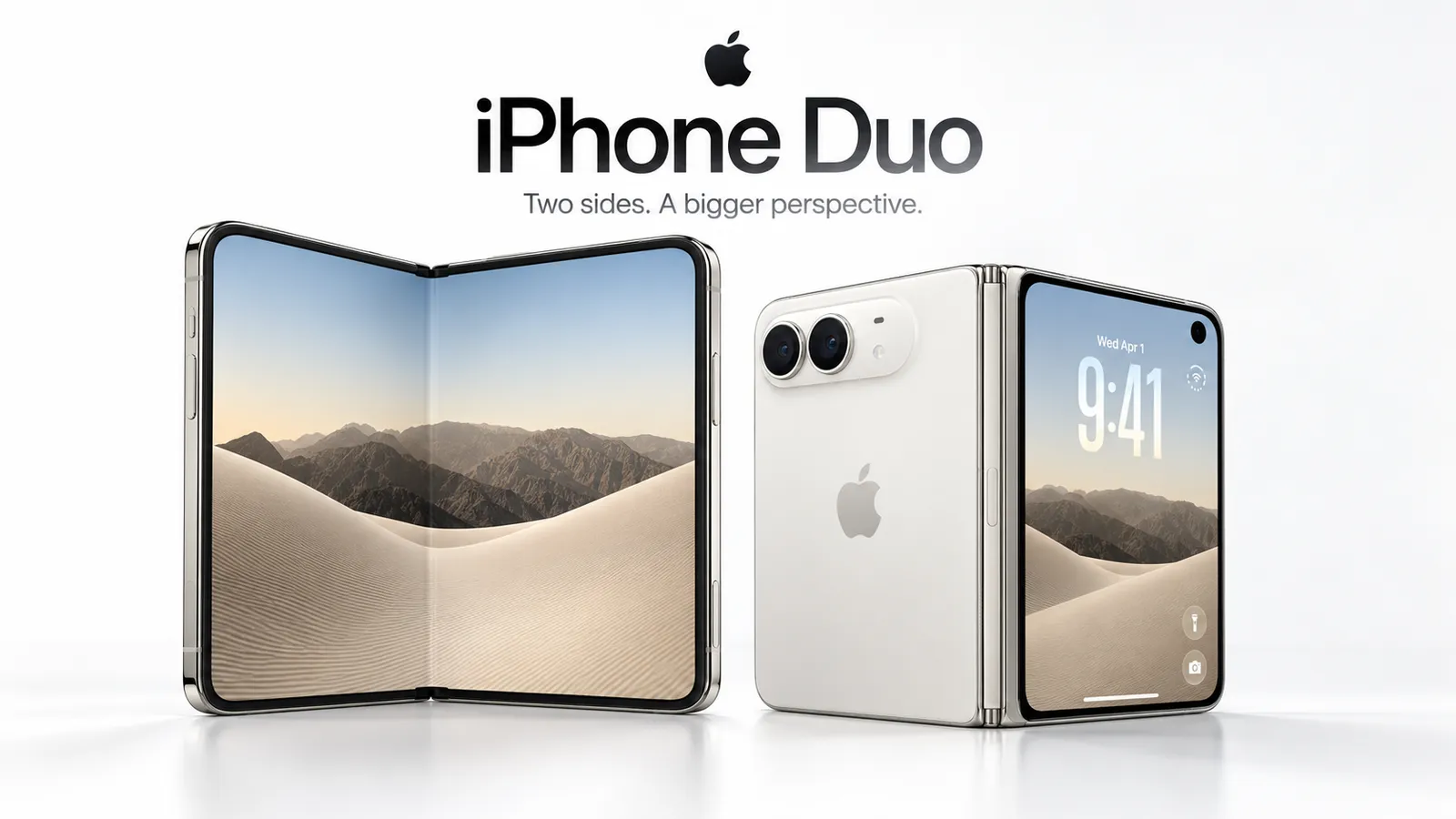
Apple announced its first foldable phone, the iPhone Duo, on September 9, 2026, John Ternus's first keynote as CEO. It opens into a 7.6-inch inner display, Apple's largest ever, behind a titanium frame and Ceramic Shield glass on both sides. It trades Face ID for Touch ID in the side button, supports the existing Apple Pencil starting later this year, and starts at $1,999. It doesn't ship until October 23, 2026, so nobody outside Apple has actually used one yet. Based on everything confirmed so far, here's whether it looks worth buying.
Apple's First Foldable, Built Its Own Way
Apple spent years staying out of the foldable phone category while Samsung built an entire lineup around it. That changed today. The iPhone Duo is real, it's coming, and Apple used its own approach rather than copying Samsung's, right down to how CEO John Ternus framed it on stage. Ternus reportedly described existing foldables as feeling like "two phones awkwardly stuck together," setting up the Duo's pitch as one continuous device rather than two screens bolted together. If you want the background on Apple's leadership change, we covered it in our Tim Cook to John Ternus transition guide.
One honest caveat before anything else: this phone doesn't ship until October 23, 2026, so this review is based entirely on what Apple confirmed at launch, not hands-on time. We'll cover the full spec sheet, whether the camera and battery setup hold up on paper, how Apple Pencil support changes the picture against Samsung, how it stacks up against the Galaxy Z Fold 8 and Z Fold 8 Ultra, and what to expect on price and availability in Pakistan.
Outer display: 5.4" Super Retina XDR, up to 3000 nits peak brightness, ProMotion up to 120Hz
Inner display: 7.6" Super Retina XDR with a custom nano-texture finish, also up to 3000 nits and 120Hz ProMotion, 50% larger than the iPhone 18 Pro Max's display
Chip: Apple A20 Pro with a dual 16-core Neural Engine, a new display engine that drives both screens at once, and a new C2 cellular modem
Storage: 256GB, 512GB, 1TB, or 2TB
Rear cameras: 48MP Dual Fusion system, a 48MP Fusion Main camera and a 48MP Fusion Ultra Wide camera, with up to 2x optical-quality zoom and 4K video at 120fps
Front cameras: 12MP Center Stage camera, plus a separate under-display FaceTime camera built into the inner screen
Battery: A dual-battery system rated for up to 31 hours of video playback using the inner display, or up to 44 hours using the outer display
Written by the iSwap Team
iSwap.pk is Pakistan's marketplace for buying, selling, and swapping mobile phones. Our editorial team covers phone reviews, price guides, and buying tips to help you shop smarter. Learn more about us
Apple announced its first foldable phone, the iPhone Duo, on September 9, 2026, John Ternus's first keynote as CEO. It opens into a 7.6-inch inner display, Apple's largest ever, behind a titanium frame and Ceramic Shield glass on both sides. It trades Face ID for Touch ID in the side button, supports the existing Apple Pencil starting later this year, and starts at $1,999. It doesn't ship until October 23, 2026, so nobody outside Apple has actually used one yet. Based on everything confirmed so far, here's whether it looks worth buying.
Apple's First Foldable, Built Its Own Way
Apple spent years staying out of the foldable phone category while Samsung built an entire lineup around it. That changed today. The iPhone Duo is real, it's coming, and Apple used its own approach rather than copying Samsung's, right down to how CEO John Ternus framed it on stage. Ternus reportedly described existing foldables as feeling like "two phones awkwardly stuck together," setting up the Duo's pitch as one continuous device rather than two screens bolted together. If you want the background on Apple's leadership change, we covered it in our Tim Cook to John Ternus transition guide.
One honest caveat before anything else: this phone doesn't ship until October 23, 2026, so this review is based entirely on what Apple confirmed at launch, not hands-on time. We'll cover the full spec sheet, whether the camera and battery setup hold up on paper, how Apple Pencil support changes the picture against Samsung, how it stacks up against the Galaxy Z Fold 8 and Z Fold 8 Ultra, and what to expect on price and availability in Pakistan.
Outer display: 5.4" Super Retina XDR, up to 3000 nits peak brightness, ProMotion up to 120Hz
Inner display: 7.6" Super Retina XDR with a custom nano-texture finish, also up to 3000 nits and 120Hz ProMotion, 50% larger than the iPhone 18 Pro Max's display
Chip: Apple A20 Pro with a dual 16-core Neural Engine, a new display engine that drives both screens at once, and a new C2 cellular modem
Storage: 256GB, 512GB, 1TB, or 2TB
Rear cameras: 48MP Dual Fusion system, a 48MP Fusion Main camera and a 48MP Fusion Ultra Wide camera, with up to 2x optical-quality zoom and 4K video at 120fps
Front cameras: 12MP Center Stage camera, plus a separate under-display FaceTime camera built into the inner screen
Battery: A dual-battery system rated for up to 31 hours of video playback using the inner display, or up to 44 hours using the outer display
Written by the iSwap Team
iSwap.pk is Pakistan's marketplace for buying, selling, and swapping mobile phones. Our editorial team covers phone reviews, price guides, and buying tips to help you shop smarter. Learn more about us
Charging: Fast wired charging to 50% in about 20 minutes, plus MagSafe wireless charging
Build: Grade 5 titanium frame and hinge cover, Ceramic Shield front and back, IP68 rated
Authentication: Touch ID, integrated into the side button, not Face ID
OS: iOS 27, with Apple Intelligence and the newer Siri AI features
Colors: Star White and Night Sky
Apple didn't publish a RAM figure anywhere on its own spec page, which is normal practice for Apple but worth knowing if you see a specific number elsewhere, since anything you read right now is an estimate rather than a confirmed spec.
Does the iPhone Duo Have a Good Camera?
On paper, it's a solid but simple camera system, not a class-leading one. The 48MP Fusion Main and 48MP Fusion Ultra Wide combination is genuinely capable for everyday shooting and 4K video at up to 120fps, but there's no dedicated telephoto lens. The "2x optical-quality zoom" Apple advertises comes from cropping the 48MP main sensor, the same trick Apple already uses on its non-Pro iPhones, not a separate lens.
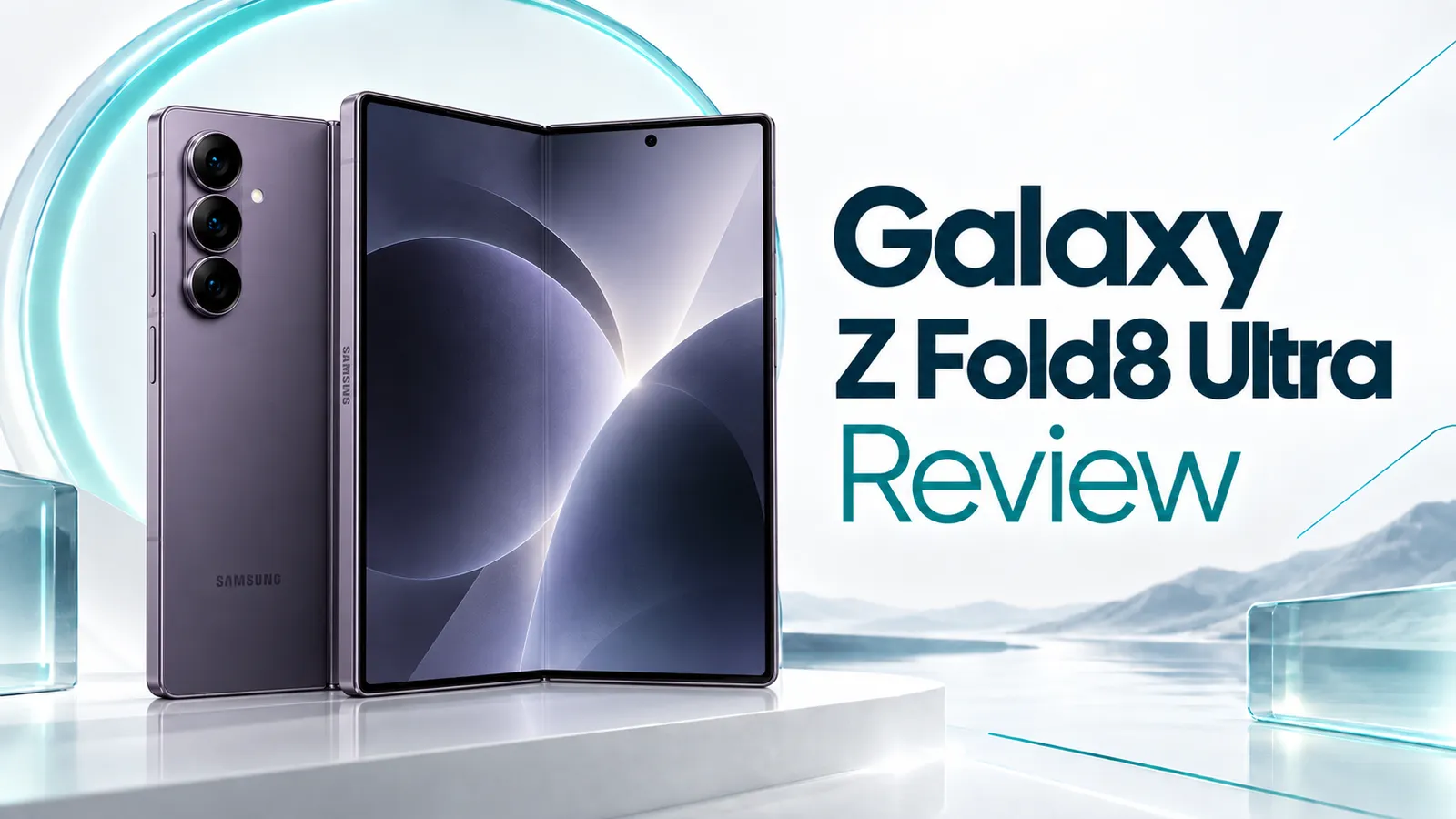
That puts it a step behind Samsung's Galaxy Z Fold 8 Ultra, which packs a 200MP main sensor and an actual 3x optical telephoto lens. Where the Duo does something no current foldable offers is the front camera setup, with both a standard 12MP Center Stage camera and a separate under-display FaceTime camera built into the inner screen itself, useful for video calls while the phone is fully unfolded.
How Long Does the Battery Last, and How Solid Is the Build?
Apple's dual-battery system is rated for up to 31 hours of video playback using the larger inner display, or up to 44 hours if you stick to the outer screen, figures that sound competitive with other large foldables on paper, though nobody outside Apple has verified them independently yet. Charging is solid rather than exceptional: 50% in about 20 minutes on a wired charger, plus MagSafe wireless support.
The build looks genuinely serious on paper. A grade 5 titanium frame and hinge cover, Ceramic Shield glass front and back, and an IP68 rating for dust and water resistance all point to Apple treating durability as a priority for its first folding hardware. The one real trade-off is biometrics: Apple dropped Face ID entirely in favor of Touch ID built into the side button, a decision that will divide opinion, especially for anyone who's used Face ID exclusively on every iPhone for years.
Apple Pencil Support Is a Real Edge Over Samsung's Z Fold 8
The iPhone Duo works with the existing Apple Pencil (USB-C), though Apple says that support is "coming later this year" rather than at launch. This matters more than it might sound, because Samsung dropped S Pen support from its own Fold line starting with the Galaxy Z Fold 7, and neither the Galaxy Z Fold 8 nor the Z Fold 8 Ultra brought it back.
If stylus input on a foldable matters to you, that gap has been open for two Samsung generations, and Apple stepping into it, even with delayed availability, is a genuine advantage for anyone who wants to take notes or sketch on the larger inner display.
How Does It Compare to the Galaxy Z Fold 8 and Z Fold 8 Ultra?
Apple and Samsung approached the same idea from different directions. The Duo's 5.4-inch outer display is wide and short, closer to how a normal phone feels in one hand, while Samsung's Fold line uses a taller, narrower cover screen built more around productivity than one-handed comfort.
On price, the two companies ended up close together. The Duo starts at $1,999, only around $100 to $200 more than the Galaxy Z Fold 8's starting price, rather than the larger premium some expected for Apple's first attempt. The clearest practical difference right now is availability: both Samsung foldables are already shipping, while the Duo doesn't reach buyers until October 23. If camera versatility matters most, Samsung's Z Fold 8 Ultra still wins with its 200MP sensor and real telephoto lens. If stylus support and Apple's software ecosystem matter more, the Duo is currently the only one of the three offering both.
What Are the Pros and Cons of the iPhone Duo?
iPhone Duo Pros
Huge 7.6-inch folding display — The iPhone Duo offers a much larger viewing area when unfolded, making it more comfortable for watching videos, reading, gaming, browsing, and multitasking.
120Hz ProMotion on both displays — Both the inner and outer OLED screens support high refresh rates, providing smoother scrolling, animations, and supported games.
Excellent display visibility — The inner display is designed to reduce reflections and glare, helping improve visibility under bright indoor lighting and other challenging conditions.
Powerful A20 Pro performance — Apple's flagship processor gives the iPhone Duo enough performance for demanding apps, gaming, multitasking, photography, and everyday use.
Better multitasking experience — The larger foldable display allows users to work with more content at once, including side-by-side applications and layouts designed specifically for the expanded screen.
Premium and durable construction — Apple uses premium materials around the frame, hinge, and exterior while also providing water and dust resistance for additional protection.
Capable 48MP camera system — The main camera setup offers high-resolution photography and strong video capabilities suitable for everyday photography and content creation.
Strong claimed battery life — Battery endurance is one of the notable advantages, particularly when the smaller outer screen is used instead of keeping the large inner display active continuously.
Cleaner inner display design — The inner camera implementation helps maintain a more uninterrupted viewing experience on the large folding display.
Apple Pencil support — Pencil compatibility gives the iPhone Duo additional usefulness for note-taking, drawing, document annotation, and other productivity tasks.
iPhone Duo Cons
Very expensive — The iPhone Duo sits at the premium end of Apple's lineup, making its high price one of the biggest barriers for potential buyers.
Small outer display — The cover screen may feel compact compared with the much larger displays found on most modern flagship smartphones.
Wide folded design — Its unusual proportions may not be comfortable for everyone, particularly users who prefer narrow phones that are easier to operate with one hand.
No dedicated telephoto camera — The camera system lacks the dedicated long-range telephoto hardware available on Apple's Pro models, limiting optical zoom flexibility.
Touch ID instead of Face ID — Users accustomed to Face ID may consider fingerprint authentication through the side button a compromise on such an expensive device.
Long-term durability remains unknown — As a new foldable design, there is not yet enough long-term real-world data to determine how the hinge and flexible display will perform after years of daily use.
Display crease may remain noticeable — Although Apple has worked to reduce the folding crease, it may still become visible from certain viewing angles or under particular lighting conditions.
Some features may arrive later — Certain functionality associated with the new foldable format may not necessarily be available immediately at launch.
eSIM-only design — The lack of a physical SIM card slot could be inconvenient for users who regularly switch SIM cards or use networks with limited eSIM support.
Large display consumes more battery — Using the unfolded inner screen continuously requires more power, so battery life can be noticeably lower compared with relying mainly on the smaller outer display.
For early adopters who want Apple's latest technology and value the larger display, the iPhone Duo could be an exciting upgrade. Buyers who prioritize value, camera zoom, or proven long-term durability may prefer to wait for future generations.
Should You Buy the iPhone Duo in Pakistan?
There's no confirmed Pakistan pricing or PTA registration guidance yet, which is normal this soon after a launch. New Apple flagships have historically reached Pakistan through official channels weeks to months after their US release, and PTA tax on flagship iPhones has typically added a substantial amount on top of the base price, so budget for that once local pricing appears rather than assuming the $1,999 US price will translate directly.
The safest approach is to wait for Apple phone listings in Pakistan to reflect real local pricing once the Duo actually reaches local retailers.
Conclusion
Based on everything Apple confirmed today, the iPhone Duo looks like a genuinely serious first attempt rather than a rushed one. The build quality, matched displays, and Apple Pencil support are real strengths on paper, and dropping Face ID for Touch ID is the kind of trade-off that will split opinion until people actually get to use it day to day. The camera is the clearest weak point next to Samsung's more capable Z Fold 8 Ultra, and with a six-week wait until it ships, there's no independent testing yet to confirm any of Apple's own claims.
If you want a foldable with the best camera available right now, the Galaxy Z Fold 8 Ultra is already on the market and worth a look. If you want Apple's ecosystem, Apple Pencil support, and are willing to wait, the iPhone Duo is shaping up to be worth serious consideration once it actually ships and gets real-world testing.
Based on what Apple has confirmed, it looks like a serious first foldable with strong build quality and Apple Pencil support, though the camera is simpler than Samsung's Z Fold 8 Ultra. It doesn't ship until October 23, 2026, so there's no independent testing yet to fully confirm Apple's claims.
Does the iPhone Duo have Face ID?
No. Apple replaced Face ID with Touch ID, built into the side button, on the iPhone Duo.
Does the iPhone Duo support Apple Pencil?
Yes, it works with the existing Apple Pencil (USB-C), though Apple says that support is coming later this year rather than at launch.
How much does the iPhone Duo cost?
It starts at $1,999 for the 256GB model, with 512GB, 1TB, and 2TB options also available at higher prices.
When can you buy the iPhone Duo?
Preorders open October 16, 2026, at 5:00 a.m. Pacific time, with sales starting October 23, 2026, in 70 countries.
How does the iPhone Duo compare to the Galaxy Z Fold 8?
The Duo has a wider, more phone-like outer display and adds Apple Pencil support, something Samsung dropped after the Galaxy Z Fold 7. The Z Fold 8 Ultra still has a stronger camera system, and both Samsung phones are already available, while the Duo doesn't ship until October 23.
Charging: Fast wired charging to 50% in about 20 minutes, plus MagSafe wireless charging
Build: Grade 5 titanium frame and hinge cover, Ceramic Shield front and back, IP68 rated
Authentication: Touch ID, integrated into the side button, not Face ID
OS: iOS 27, with Apple Intelligence and the newer Siri AI features
Colors: Star White and Night Sky
Apple didn't publish a RAM figure anywhere on its own spec page, which is normal practice for Apple but worth knowing if you see a specific number elsewhere, since anything you read right now is an estimate rather than a confirmed spec.
Does the iPhone Duo Have a Good Camera?
On paper, it's a solid but simple camera system, not a class-leading one. The 48MP Fusion Main and 48MP Fusion Ultra Wide combination is genuinely capable for everyday shooting and 4K video at up to 120fps, but there's no dedicated telephoto lens. The "2x optical-quality zoom" Apple advertises comes from cropping the 48MP main sensor, the same trick Apple already uses on its non-Pro iPhones, not a separate lens.
That puts it a step behind Samsung's Galaxy Z Fold 8 Ultra, which packs a 200MP main sensor and an actual 3x optical telephoto lens. Where the Duo does something no current foldable offers is the front camera setup, with both a standard 12MP Center Stage camera and a separate under-display FaceTime camera built into the inner screen itself, useful for video calls while the phone is fully unfolded.
How Long Does the Battery Last, and How Solid Is the Build?
Apple's dual-battery system is rated for up to 31 hours of video playback using the larger inner display, or up to 44 hours if you stick to the outer screen, figures that sound competitive with other large foldables on paper, though nobody outside Apple has verified them independently yet. Charging is solid rather than exceptional: 50% in about 20 minutes on a wired charger, plus MagSafe wireless support.
The build looks genuinely serious on paper. A grade 5 titanium frame and hinge cover, Ceramic Shield glass front and back, and an IP68 rating for dust and water resistance all point to Apple treating durability as a priority for its first folding hardware. The one real trade-off is biometrics: Apple dropped Face ID entirely in favor of Touch ID built into the side button, a decision that will divide opinion, especially for anyone who's used Face ID exclusively on every iPhone for years.
Apple Pencil Support Is a Real Edge Over Samsung's Z Fold 8
The iPhone Duo works with the existing Apple Pencil (USB-C), though Apple says that support is "coming later this year" rather than at launch. This matters more than it might sound, because Samsung dropped S Pen support from its own Fold line starting with the Galaxy Z Fold 7, and neither the Galaxy Z Fold 8 nor the Z Fold 8 Ultra brought it back.
If stylus input on a foldable matters to you, that gap has been open for two Samsung generations, and Apple stepping into it, even with delayed availability, is a genuine advantage for anyone who wants to take notes or sketch on the larger inner display.
How Does It Compare to the Galaxy Z Fold 8 and Z Fold 8 Ultra?
Apple and Samsung approached the same idea from different directions. The Duo's 5.4-inch outer display is wide and short, closer to how a normal phone feels in one hand, while Samsung's Fold line uses a taller, narrower cover screen built more around productivity than one-handed comfort.
On price, the two companies ended up close together. The Duo starts at $1,999, only around $100 to $200 more than the Galaxy Z Fold 8's starting price, rather than the larger premium some expected for Apple's first attempt. The clearest practical difference right now is availability: both Samsung foldables are already shipping, while the Duo doesn't reach buyers until October 23. If camera versatility matters most, Samsung's Z Fold 8 Ultra still wins with its 200MP sensor and real telephoto lens. If stylus support and Apple's software ecosystem matter more, the Duo is currently the only one of the three offering both.
What Are the Pros and Cons of the iPhone Duo?
iPhone Duo Pros
Huge 7.6-inch folding display — The iPhone Duo offers a much larger viewing area when unfolded, making it more comfortable for watching videos, reading, gaming, browsing, and multitasking.
120Hz ProMotion on both displays — Both the inner and outer OLED screens support high refresh rates, providing smoother scrolling, animations, and supported games.
Excellent display visibility — The inner display is designed to reduce reflections and glare, helping improve visibility under bright indoor lighting and other challenging conditions.
Powerful A20 Pro performance — Apple's flagship processor gives the iPhone Duo enough performance for demanding apps, gaming, multitasking, photography, and everyday use.
Better multitasking experience — The larger foldable display allows users to work with more content at once, including side-by-side applications and layouts designed specifically for the expanded screen.
Premium and durable construction — Apple uses premium materials around the frame, hinge, and exterior while also providing water and dust resistance for additional protection.
Capable 48MP camera system — The main camera setup offers high-resolution photography and strong video capabilities suitable for everyday photography and content creation.
Strong claimed battery life — Battery endurance is one of the notable advantages, particularly when the smaller outer screen is used instead of keeping the large inner display active continuously.
Cleaner inner display design — The inner camera implementation helps maintain a more uninterrupted viewing experience on the large folding display.
Apple Pencil support — Pencil compatibility gives the iPhone Duo additional usefulness for note-taking, drawing, document annotation, and other productivity tasks.
iPhone Duo Cons
Very expensive — The iPhone Duo sits at the premium end of Apple's lineup, making its high price one of the biggest barriers for potential buyers.
Small outer display — The cover screen may feel compact compared with the much larger displays found on most modern flagship smartphones.
Wide folded design — Its unusual proportions may not be comfortable for everyone, particularly users who prefer narrow phones that are easier to operate with one hand.
No dedicated telephoto camera — The camera system lacks the dedicated long-range telephoto hardware available on Apple's Pro models, limiting optical zoom flexibility.
Touch ID instead of Face ID — Users accustomed to Face ID may consider fingerprint authentication through the side button a compromise on such an expensive device.
Long-term durability remains unknown — As a new foldable design, there is not yet enough long-term real-world data to determine how the hinge and flexible display will perform after years of daily use.
Display crease may remain noticeable — Although Apple has worked to reduce the folding crease, it may still become visible from certain viewing angles or under particular lighting conditions.
Some features may arrive later — Certain functionality associated with the new foldable format may not necessarily be available immediately at launch.
eSIM-only design — The lack of a physical SIM card slot could be inconvenient for users who regularly switch SIM cards or use networks with limited eSIM support.
Large display consumes more battery — Using the unfolded inner screen continuously requires more power, so battery life can be noticeably lower compared with relying mainly on the smaller outer display.
For early adopters who want Apple's latest technology and value the larger display, the iPhone Duo could be an exciting upgrade. Buyers who prioritize value, camera zoom, or proven long-term durability may prefer to wait for future generations.
Should You Buy the iPhone Duo in Pakistan?
There's no confirmed Pakistan pricing or PTA registration guidance yet, which is normal this soon after a launch. New Apple flagships have historically reached Pakistan through official channels weeks to months after their US release, and PTA tax on flagship iPhones has typically added a substantial amount on top of the base price, so budget for that once local pricing appears rather than assuming the $1,999 US price will translate directly.
The safest approach is to wait for Apple phone listings in Pakistan to reflect real local pricing once the Duo actually reaches local retailers.
Conclusion
Based on everything Apple confirmed today, the iPhone Duo looks like a genuinely serious first attempt rather than a rushed one. The build quality, matched displays, and Apple Pencil support are real strengths on paper, and dropping Face ID for Touch ID is the kind of trade-off that will split opinion until people actually get to use it day to day. The camera is the clearest weak point next to Samsung's more capable Z Fold 8 Ultra, and with a six-week wait until it ships, there's no independent testing yet to confirm any of Apple's own claims.
If you want a foldable with the best camera available right now, the Galaxy Z Fold 8 Ultra is already on the market and worth a look. If you want Apple's ecosystem, Apple Pencil support, and are willing to wait, the iPhone Duo is shaping up to be worth serious consideration once it actually ships and gets real-world testing.
Based on what Apple has confirmed, it looks like a serious first foldable with strong build quality and Apple Pencil support, though the camera is simpler than Samsung's Z Fold 8 Ultra. It doesn't ship until October 23, 2026, so there's no independent testing yet to fully confirm Apple's claims.
Does the iPhone Duo have Face ID?
No. Apple replaced Face ID with Touch ID, built into the side button, on the iPhone Duo.
Does the iPhone Duo support Apple Pencil?
Yes, it works with the existing Apple Pencil (USB-C), though Apple says that support is coming later this year rather than at launch.
How much does the iPhone Duo cost?
It starts at $1,999 for the 256GB model, with 512GB, 1TB, and 2TB options also available at higher prices.
When can you buy the iPhone Duo?
Preorders open October 16, 2026, at 5:00 a.m. Pacific time, with sales starting October 23, 2026, in 70 countries.
How does the iPhone Duo compare to the Galaxy Z Fold 8?
The Duo has a wider, more phone-like outer display and adds Apple Pencil support, something Samsung dropped after the Galaxy Z Fold 7. The Z Fold 8 Ultra still has a stronger camera system, and both Samsung phones are already available, while the Duo doesn't ship until October 23.