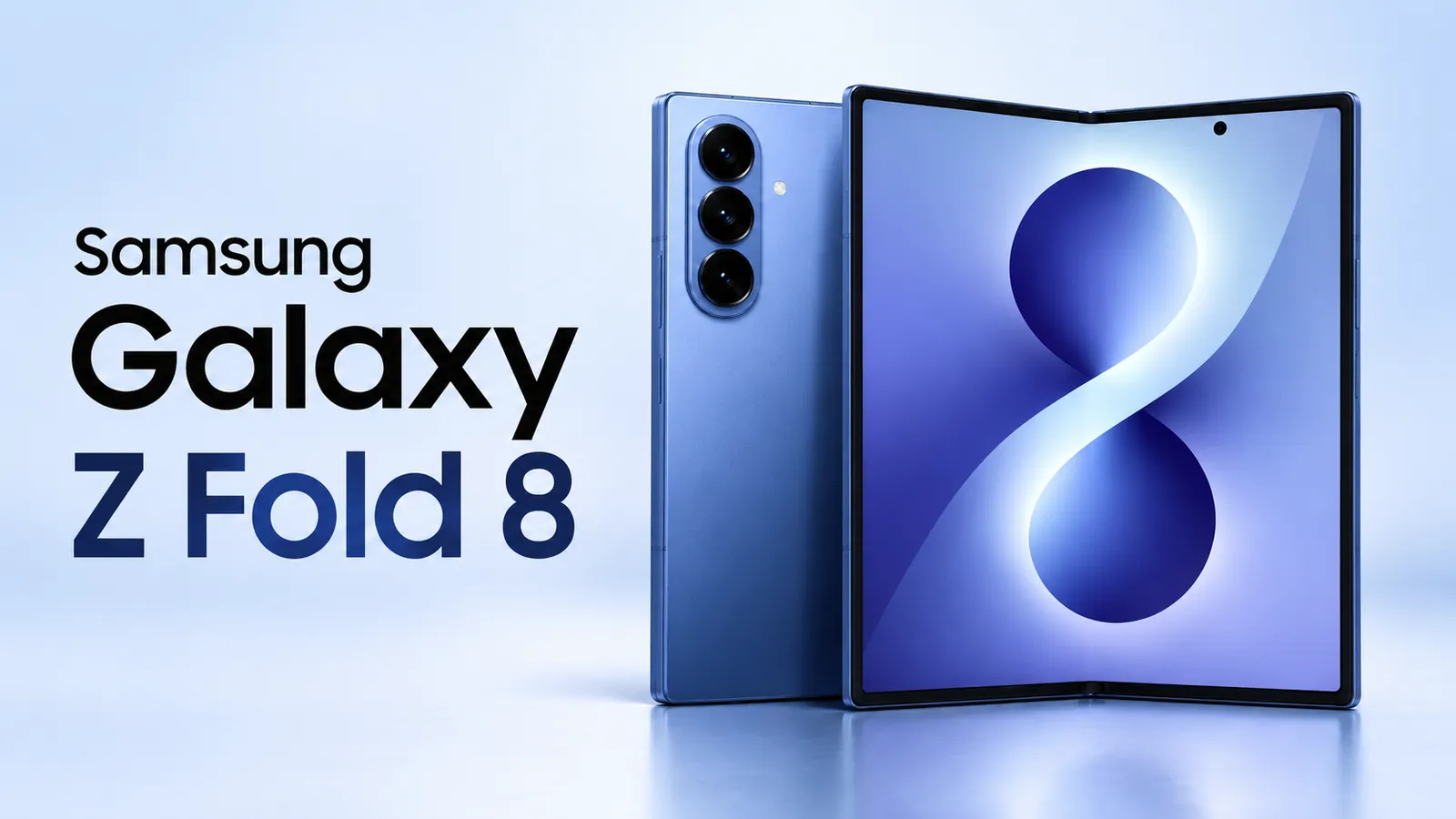
Samsung officially launched the Galaxy Z Fold 8 on August 7, 2026, with a Snapdragon 8 Elite Gen 5 chip, a 7.6-inch inner display, a 4,800mAh battery, and a noticeably reduced crease thanks to a new titanium display layer. For the first time, Samsung split the Fold line into two models, the standard Z Fold 8 and a larger Z Fold 8 Ultra with a better camera. Pakistan pricing isn't official yet, but third-party estimates put the standard model above Rs. 6.5 lakh once import duties and PTA tax are added. Check iSwap.pk for real Pakistan listings once local retailers confirm pricing.
Samsung did something it's never done before with this year's foldable: it split the Galaxy Z Fold line into two separate phones sold side by side. If you've been searching for the Galaxy Z Fold 8 and keep running into a confusing mix of specs, that's why. This guide covers the standard Z Fold 8 in full detail, how it stacks up against the pricier Z Fold 8 Ultra, what actually changed from last year's Z Fold 7, and what you'll realistically pay once it reaches Pakistan.
Samsung Galaxy Z Fold 8: What's New
Samsung unveiled the Galaxy Z Fold 8 on July 22, 2026, alongside the Galaxy Z Fold 8 Ultra and the Galaxy Z Flip 8, with the Fold 8 going on sale globally on August 7, 2026. That's a real, completed launch with confirmed specs and pricing, not a rumor.
The headline change this year is the lineup split itself. Instead of one Fold model, Samsung now sells two: the standard Z Fold 8, which trades some screen size for a more practical, wider shape, and the Z Fold 8 Ultra, which keeps a bigger 8-inch display and adds a much stronger camera system for a higher price. This is worth understanding before you shop, since a lot of online reviews and comparison charts mix the two together.
Samsung Galaxy Z Fold 8 Full Specifications
Here's the confirmed spec sheet for the standard Galaxy Z Fold 8:
- Main display: 7.6" Dynamic LTPO AMOLED 2X, 2448 x 1848, 4:3 ratio, 120Hz, HDR10+, 3,000 nits peak brightness
- Cover display: 5.5", 1972 x 1248, 10:16 ratio
- Chipset: Snapdragon 8 Elite Gen 5 (3nm), Adreno 840 GPU
- RAM / Storage: 12GB with 256GB or 512GB, or 16GB with 1TB, UFS 4.0
- Rear cameras: 50MP main (f/1.8) + 50MP ultrawide (f/1.9)
- Front cameras: 10MP (f/2.2) on both the inner and cover displays
- Video: Up to 8K at 30fps
- Battery: 4,800 mAh dual cell, 45W wired charging (65% in 30 minutes), 20W wireless, 4.5W reverse wireless
- OS: Android 17 with One UI 9, up to 7 major OS updates promised
- Build: Gorilla Glass Ceramic 3 outer display, titanium support backing, IP48 rating
- Dimensions: 123.9 x 161.4 x 4.5mm unfolded, 123.9 x 81.9 x 9.7mm folded
- Weight: 201g
- Colors: Cream, Graphite, Lavender, and an online-exclusive Pistachio
Samsung's promise of 7 major OS updates is genuinely strong for a phone in this category, and the 3,000-nit peak brightness should make the inner display usable in direct outdoor light, a common complaint with older foldables.
Is the Crease Actually Fixed on the Galaxy Z Fold 8?
Mostly, yes. Samsung redesigned the display with a titanium-alloy film layer and a new dual-UTG (Ultra Thin Glass) structure, and reviewers describe it as the least visible crease seen on a Samsung foldable to date.
Reviewers testing the phone found that when viewed head-on, the crease is barely noticeable at all, a real step up from the Z Fold 7 and earlier models. It's still there under certain lighting angles, and it hasn't disappeared entirely, but the improvement is consistent enough across independent reviews that it's fair to call this the biggest single upgrade on the standard Z Fold 8 this year. Samsung also added a new anti-glare coating that cuts down glare without hurting image quality, which pairs well with the brighter panel.
How Does the Galaxy Z Fold 8 Compare to the Z Fold 7?
The Z Fold 8 actually has a smaller inner screen than last year's Z Fold 7, 7.6 inches versus 8 inches, but it's shaped differently and more practical to use day to day.
Samsung moved to a shorter, wider 4:3 aspect ratio this year instead of the tall, narrow shape the Fold line has used for years. That makes the inner screen better suited to widescreen video and side-by-side multitasking, though it does mean less raw diagonal size on paper. The cover screen shrank too, from 6.5 inches down to 5.5 inches, which some reviewers noted makes cover-screen content feel a bit more condensed.
Camera-wise, the change is a trade rather than a straightforward upgrade. The Z Fold 7's main camera was a 200MP sensor, while the Z Fold 8 drops to 50MP, but its ultrawide jumps from 12MP to 50MP, a much bigger and more useful improvement for everyday shots. Battery capacity grew from 4,400mAh to 4,800mAh, and benchmark testing shows a real performance jump too, with the Z Fold 8 scoring around 10,467 on Geekbench's multi-core test against the Z Fold 7's 9,443.
If you're on a Z Fold 7 or older, the improved crease, bigger battery, and more practical screen shape make this a meaningful upgrade rather than a minor refresh. If you already own last year's model purely for camera quality, the megapixel drop on the main sensor is worth knowing about first.
Galaxy Z Fold 8 vs. Z Fold 8 Ultra: Which Should You Buy?
The Z Fold 8 Ultra costs more and gets a bigger screen, a much stronger camera, and a bigger battery. For most buyers, the standard Z Fold 8 covers the core experience just as well for meaningfully less money.
Features of Z Fold 8 vs Z Fold 8 Ultra
- Main display | 7.6" | 8.0" |
- Cover display | 5.5" | 6.5" |
- Main camera | 50MP, f/1.8 | 200MP, f/1.7, with telephoto |
- Battery | 4,800mAh | 5,000mAh (silicon-carbon) |
- Folded thickness | 9.7mm | 8.9mm |
- Weight | 201g | 215g |
- Starting price | $1,899 | $2,099 |
The Ultra's camera system is the real differentiator: it keeps the 200MP main sensor, matches the Fold 8's 50MP ultrawide, and adds a 10MP 3x telephoto lens the standard model doesn't have at all. If you actually shoot a lot of photos or video on your phone, that gap is worth paying for. If you mainly want the foldable form factor for multitasking, reading, and everyday use, reviewers consistently note that day-to-day performance between the two is nearly identical, which makes the standard Z Fold 8 the better value pick for most people.
Is the Galaxy Z Fold 8 Durable? What Reviewers Found
It's rated IP48 for water resistance, meaning it can survive being submerged up to 1.5 meters for 30 minutes, but that rating doesn't fully cover fine dust or sand, and durability testers have found real wear after repeated folding.
Worth understanding precisely: the "4" in IP48 only certifies protection against solid objects 1mm or larger. Fine sand and dust particles are smaller than that and can still work their way into the hinge gap over time, even though the phone is well protected against water. On the positive side, testing from JerryRigEverything found that sand contact no longer causes the kind of immediate, catastrophic hinge failure seen on some of the earliest foldable phones, a real improvement over the category's early years.
Samsung rates the hinge for 500,000 folds, though some outlets have reported a lower 200,000-fold figure, a discrepancy worth flagging rather than treating either number as settled. Independent teardown testing from iFixit found the phone gets a repairability score of just 4 out of 10, and after repeatedly opening and closing the phone during testing, the hinge began producing audible crunching and grinding sounds. None of this means the phone is fragile in normal use, but it's a fair reminder that foldables still carry more long-term mechanical risk than a traditional slab phone.
Samsung Galaxy Z Fold 8 Price in Pakistan
Samsung Pakistan hasn't confirmed official local pricing yet, but early estimates from Pakistani retailers put the base 12GB/256GB Galaxy Z Fold 8 around Rs. 623,999, with some sources projecting the real street price closer to Rs. 6.5 lakh or higher once import duties and PTA registration costs are factored in.
That PTA cost is worth budgeting for separately. As a point of reference for phones in this price tier, PTA tax on a similarly priced Samsung foldable has been reported around Rs. 198,000 on a CNIC-based registration and slightly less on a passport-based one, though your exact tax depends on the specific device, its declared value, and current regulations at the time you register it. If you're importing or buying a non-PTA unit, always verify the IMEI on the official PTA website before paying, since fine differences in tax treatment can meaningfully change the total cost.
Given how much these estimates vary between retailers right now, the safest approach is to check Samsung phone prices in Pakistan once official listings appear, rather than budgeting around a single early estimate.
How Does It Compare to Other Foldables?
Against Honor's Magic V5 and V6, the Galaxy Z Fold 8 trades some raw battery capacity and charging speed for Samsung's software ecosystem and the year's biggest crease improvement.
Honor's rival foldables pack a larger battery, around 5,820mAh on the Magic V5, against 45W or 66W wired charging depending on the model, both ahead of the Z Fold 8's 4,800mAh and 45W. The Magic V5 is also thinner folded, around 8.8mm, compared to the standard Z Fold 8's 9.7mm folded thickness. Samsung's advantages are elsewhere: One UI's multitasking tools are more mature on a foldable than most Android skins, and the Z Fold 8's crease reduction is a genuine step ahead of most competitors in the category.
It's also worth keeping an eye on Apple's upcoming entry into this category. Apple is expected to launch its first-ever foldable iPhone around September 2026, reportedly priced above $2,000, with a similar focus on minimizing the crease. If you're deciding between ecosystems rather than just picking the best Android foldable, it may be worth waiting to see how that device actually performs in reviews before committing to either side. If you're weighing Apple's broader 2026 lineup too, our Apple iPhone 18 series guide covers what else is coming from Apple this cycle.
Is the Galaxy Z Fold 8 Worth Buying in Pakistan?
Yes, if you want the most refined large-screen foldable available right now and can justify the price. The reduced crease, brighter display, and stronger battery make this the easiest Z Fold to recommend in years, even with a camera system that trades some resolution for balance.
It's not the right pick if you specifically want the best possible camera in a foldable, since that's what the pricier Z Fold 8 Ultra is for, or if raw thinness and battery capacity matter more to you than Samsung's software ecosystem, where Honor's rivals currently have an edge on paper.
If you do decide to buy one in Pakistan before Samsung confirms official local pricing, treat it like any other high-value imported phone: verify the IMEI on PTA's website before paying, inspect both displays and the hinge in person if at all possible, and always ask for original packaging and a proper receipt to avoid a refurbished unit being sold as new.
Conclusion
The Samsung Galaxy Z Fold 8 is the most convincing version of Samsung's foldable yet, mostly because of what it fixes rather than what it adds: a far less visible crease, a brighter screen, a bigger battery, and a shape that's genuinely more useful day to day. The tradeoffs, a lower main camera resolution and a folded thickness that isn't class-leading, are real but manageable for most buyers.
For Pakistani buyers specifically, the open question right now is price, not quality. Wait for Samsung's official local pricing if you can, and treat every early estimate as a starting point rather than a final number. Ready to compare real listings once they land? Browse phones on iSwap.pk to see live prices, or sell or swap your current phone to help fund the upgrade. New to swapping? Here's how phone swapping works so you know what to expect.
Frequently Asked Questions
1. When did the Samsung Galaxy Z Fold 8 launch? Samsung unveiled it on July 22, 2026, with global sales starting August 7, 2026. It's already officially available in several markets.
2. What's the difference between the Galaxy Z Fold 8 and the Z Fold 8 Ultra? The Ultra has a bigger 8-inch main display, a much stronger 200MP camera with telephoto zoom, and a larger 5,000mAh battery, all for a higher starting price. The standard Z Fold 8 covers day-to-day multitasking and productivity just as well for less money.
3. Is the crease still visible on the Galaxy Z Fold 8? It's much less visible than on previous models thanks to a new titanium display layer, and reviewers say it's barely noticeable head-on, but it hasn't been eliminated completely and can still show under certain lighting angles.
4. Is the Galaxy Z Fold 8 waterproof? It carries an IP48 rating, meaning it can handle submersion up to 1.5 meters for 30 minutes, but that rating doesn't fully protect against fine dust or sand, which can still enter through the hinge over time.
5. How many times can you fold the Galaxy Z Fold 8 before it wears out? Samsung rates the hinge for 500,000 folds, though some reports cite a lower 200,000-fold figure. Either way, that's several years of typical daily use before mechanical wear becomes a real concern.
6. How much does the Samsung Galaxy Z Fold 8 cost in Pakistan? Official Pakistan pricing hasn't been confirmed by Samsung yet. Early retailer estimates put the base model around Rs. 623,999, with real street prices likely closer to Rs. 6.5 lakh or more once import duties and PTA tax are added.
7. Does the Galaxy Z Fold 8 have a telephoto camera? No. The standard Z Fold 8 relies on digital zoom from its 50MP main and 50MP ultrawide cameras. A telephoto lens is exclusive to the pricier Z Fold 8 Ultra.
8. Is the Galaxy Z Fold 8 a good upgrade from the Z Fold 7? For most owners, yes, especially if the visible crease bothered you on the older model. The battery, brightness, and display shape are all improved, though the main camera's resolution actually drops from the Z Fold 7's 200MP sensor to 50MP.